- calendar_today August 9, 2025
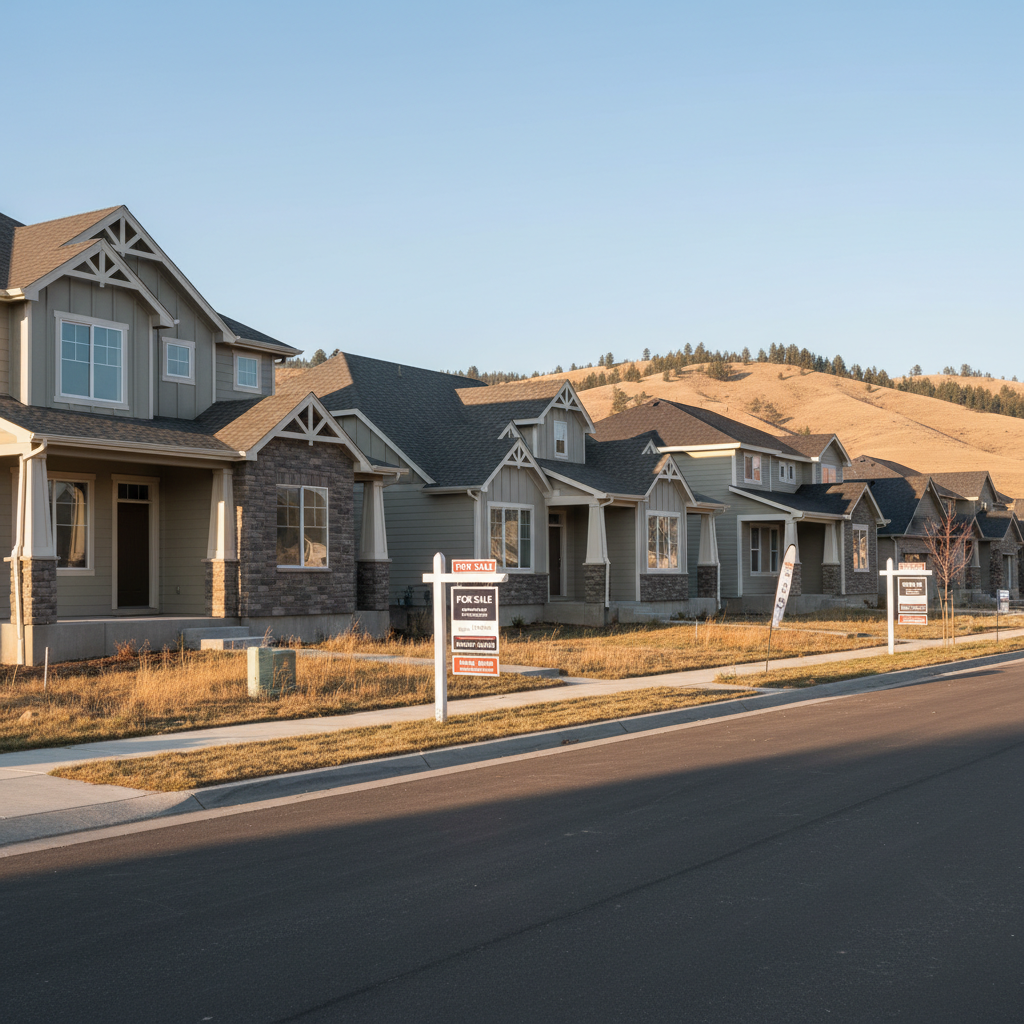
After years of explosive growth, Idaho’s housing market in 2025 has entered a notable cooling phase. Popular cities like Boise, Meridian, and Coeur d’Alene—once epicenters of post-pandemic migration—are now seeing inventory pile up, prices stabilize, and bidding wars fade into memory. The causes of this freeze are complex and interconnected: rising mortgage rates, diminished demand from out-of-state buyers, and deepening affordability challenges.
The Interest Rate Effect: From Sizzle to Stagnation
The most immediate culprit behind Idaho’s housing freeze is the cost of borrowing. The Federal Reserve’s tight monetary stance has pushed mortgage rates well above 7%, making monthly payments significantly less manageable for first-time buyers and upgraders alike.
In 2020–2022, Idaho saw record-breaking migration from states like California and Washington, with buyers flush with equity driving up prices. But in 2025, with borrowing power restricted, even cash-rich transplants are hesitating. Local lenders report a sharp drop in mortgage applications, with home loan approvals in Boise down nearly 35% year-over-year.
Boise No Longer the Boomtown
Boise, once one of the hottest housing markets in the U.S., is now emblematic of Idaho’s cooling trend. Home values have plateaued, and some neighborhoods are seeing mild declines—particularly those that saw rapid appreciation during the pandemic surge.
According to Redfin data, median home prices in Boise have dropped by 4% in the first half of 2025, and listings are sitting on the market nearly twice as long as they did in 2022. The rental market, too, has softened as demand weakens, leaving developers and landlords adjusting their expectations.
Migration Slows, Supply Outpaces Demand
One of the major tailwinds for Idaho’s market—steady in-migration from other states—has slowed in 2025. With remote work opportunities now stabilizing and affordability stretched, the inflow of new residents has declined.
Idaho Department of Labor figures show that net migration in the first five months of 2025 was down 28% compared to the same period in 2023. In cities like Twin Falls and Idaho Falls, developers who built aggressively in anticipation of demand are now contending with higher vacancies and a more cautious buyer pool.
Affordability Concerns Hit Local Buyers Hard
While Idaho’s median home prices still sit below those in neighboring Western states, they’ve grown significantly over the past five years. In 2019, the median home price in Boise was around $330,000; by 2024, it had surpassed $490,000. Wages, however, haven’t kept pace.
This affordability gap is now a primary driver behind local buyer fatigue. First-time homebuyers, particularly young families and essential workers, are increasingly priced out of urban cores. Programs designed to support low- and middle-income buyers, such as down payment assistance grants, are seeing high application volumes but limited funding.
Construction Slows but Overhang Remains
Builders across Idaho are feeling the chill as demand softens. New housing starts are down 18% from their 2023 levels statewide, according to the Idaho Building Contractors Association. Developers are pausing projects or pivoting to more affordable housing typologies—such as duplexes or modular homes—to align with changing market dynamics.
Yet, despite this slowdown in starts, many new homes completed over the last 12 months are still entering the market, creating a temporary oversupply that has put additional downward pressure on prices, especially in suburban corridors around Nampa, Caldwell, and Post Falls.
Rural and Resort Markets Also Feeling the Pressure
While urban centers are seeing the most visible signs of a freeze, rural and resort markets are also cooling. In places like Sandpoint, McCall, and Sun Valley—where second-home ownership once spiked—vacation property listings are rising. High carrying costs combined with fewer cash buyers have led some investors to offload properties.
Short-term rental markets in these areas are also feeling the pinch. Platforms like Airbnb have seen fewer bookings year-over-year, prompting owners to reassess profitability and in some cases, list their properties for sale.
Policy Response: Local Solutions in Progress
In response to these market conditions, some local governments in Idaho are examining new housing policy levers. The city of Boise has expanded incentives for affordable housing developments and is exploring zoning changes to permit more multi-family units in previously single-family zones.
Meanwhile, the Idaho State Legislature is considering adjustments to property tax caps and infrastructure investment to support balanced growth, particularly in rapidly expanding counties such as Ada and Canyon.
Outlook for the Rest of 2025
The rest of 2025 is likely to be a stabilizing period rather than a rebound. With interest rates expected to remain elevated through the end of the year and consumer confidence uncertain, the Idaho housing market is forecast to stay in a “wait and see” mode.
However, housing analysts note that Idaho’s long-term fundamentals—strong quality of life, natural beauty, and relative affordability—remain intact. Once macroeconomic conditions improve, buyer demand could resurge. Until then, sellers may need to price competitively, and buyers who can afford to act now have a rare moment of negotiating leverage.
Idaho’s 2025 housing market freeze reflects broader national trends but is magnified by the state’s rapid ascent in prior years. From Boise’s urban plateau to the rural resort slowdown, the Gem State is experiencing a pause—an opportunity for recalibration. While this freeze poses short-term challenges, it also offers the chance to build a more balanced, accessible, and sustainable housing ecosystem for Idahoans.