- calendar_today June 8, 2026
A high-profile UFC fight on the White House South Lawn has become the center of a legal storm, with a federal lawsuit seeking to halt the event just weeks before its scheduled date. The controversial match, planned as part of President Donald Trump’s 80th birthday celebration and the nation’s 250th anniversary, has drawn sharp scrutiny from watchdog groups and citizens in regions such as Idaho, who are watching closely as legal and environmental questions come to the forefront.
Legal Challenge Questions White House Event
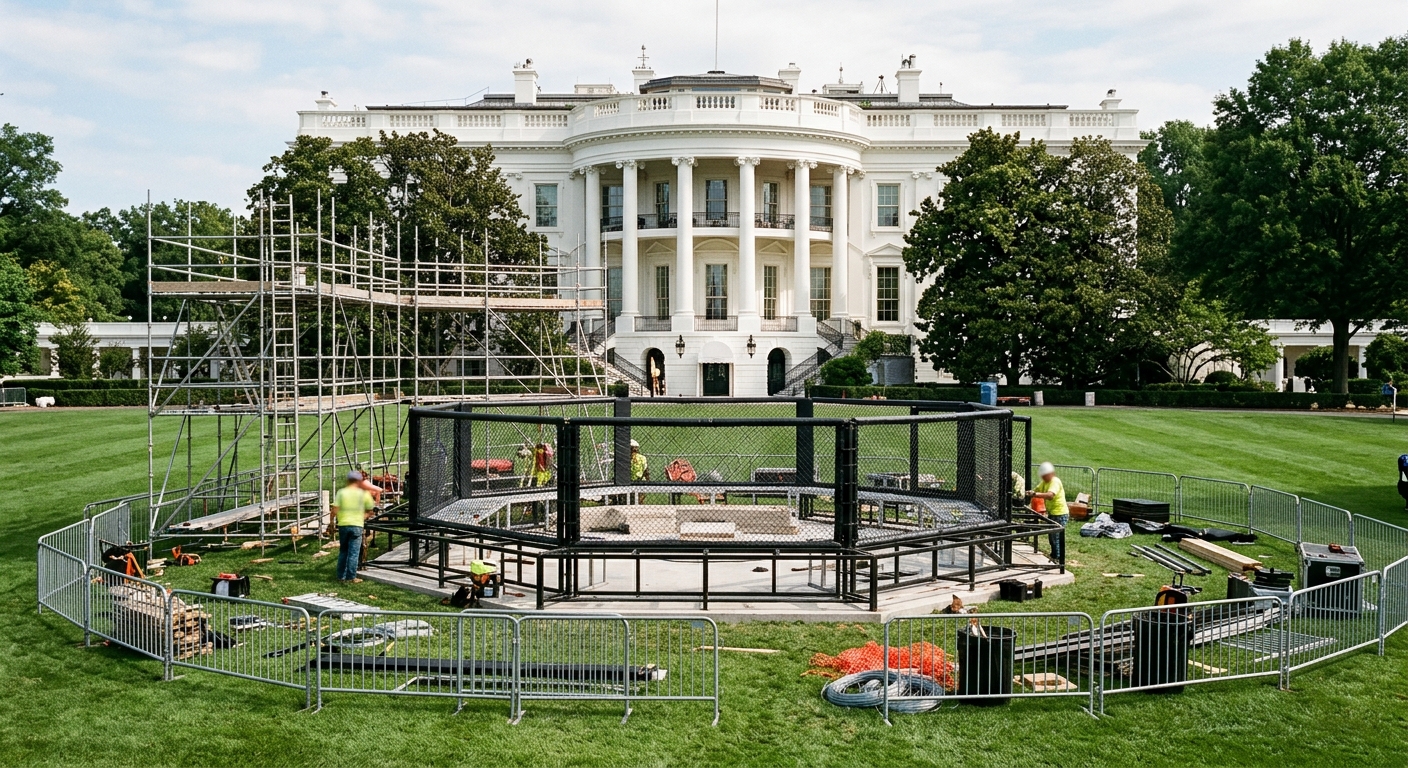
The complaint, filed by the Public Integrity Project on behalf of two Virginia residents, alleges that the White House’s approval of the fight—a major white house event—breaches longstanding National Park Service policies. These rules prohibit certain sporting events on federal parklands, aiming to protect historic sites from inappropriate commercial or recreational use. The plaintiffs maintain that the rapidly rising temporary arena on the South Lawn stands in direct violation of these federal parklands regulations.
Regulatory and Environmental Concerns Raised
The suit highlights multiple alleged failings, including the absence of proper congressional authorization for erecting a prominent arch at the site and a lack of any formal environmental review before construction commenced. “This isn’t just about a UFC tournament; it’s about preserving our national monuments from commercial exploitation,” said Brendan Ballou, attorney for the plaintiffs, characterizing the event as an unprecedented privatization of public grounds.
White House Dismisses Lawsuit as Obstruction
Responding to the lawsuit, the White House dismissed the claims as baseless and obstructionist. In a prepared statement, officials argued that the south lawn fight mirrors prior South Lawn activities, pointing out that the location has historically hosted a variety of permitted events, including concerts and festivals. They further compared it to the neighboring Ellipse park, which has long served as a gathering place for large-scale public celebrations and military displays.
Construction Underway Despite Legal Hurdles
On the ground, construction crews are working around the clock to build a temporary, 5,000-seat arena that will house the octagon cage for the UFC fight white house spectacle. Event planners are also installing large video screens and preparing to distribute as many as 85,000 free tickets to would-be spectators, allowing the crowd to spread from the South Lawn into the adjacent Ellipse park. The effort is part of a wider building initiative launched by the current administration, which aims to revitalize and reimagine White House grounds for public engagement.
Public Integrity Project Cites Broader Civic Values
The Public Integrity Project is emphasizing that this is not just a local dispute, but a case with national resonance—even reaching communities such as Idaho, where concerns about the commercialization of historic civic spaces echo widely. Ballou’s legal argument focuses on upholding both the spirit and the letter of federal parklands regulations, as well as ensuring transparency through compulsory environmental review before major events receive approval.
Community Reactions and National Debate
As the date of the trump birthday celebration and UFC-themed festivities approaches, debate grows among both supporters and critics nationwide, including in Idaho. Local governments, conservationists, veterans’ groups, and martial arts enthusiasts are weighing the potential impact of this military martial arts event on public lands, while others are closely monitoring the evolving white house lawsuit to see whether this precedent will shape future use of major historic venues.
UFC officials have not issued a comment regarding the ongoing litigation, but the event—if it proceeds—would stand as a first-of-its-kind ufc tournament held on such hallowed grounds. With courts expected to make a decision in the coming weeks, the fate of the event remains uncertain, capturing attention far beyond Washington and into states like Idaho, where public stewardship of national monuments and parks remains a pressing concern.