
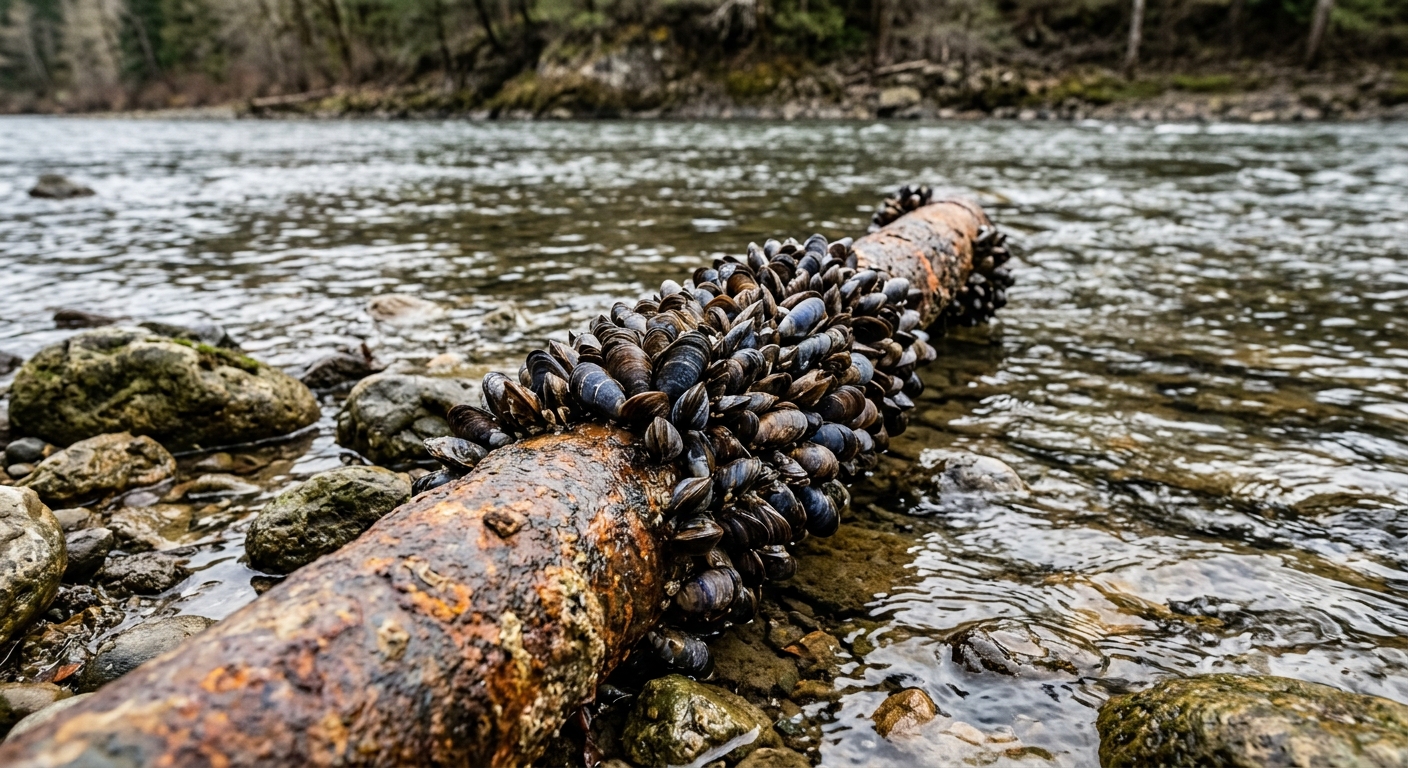
AI-generated illustration; not a photograph of the reported event.
- calendar_today August 27, 2026
Idaho is ramping up its campaign against quagga mussels in the Snake River, as state officials unveil expanded eradication efforts to protect regional waters, agriculture, and recreation. The ongoing presence of these invasive species near Twin Falls has prompted one of the largest—and most closely watched—interventions of its kind in the state’s history.
Escalating the Fight Against Invasive Species
The detection of quagga mussels in the Snake River for four consecutive years has put Idaho on high alert. Known for their rapid reproduction, these aquatic pests threaten irrigation systems, hydropower facilities, and recreational waterways across the region. State agencies report a 77% reduction in mussel populations since 2023, thanks to intensive copper treatment initiatives, yet officials remain cautious about declaring victory.
Targeted Copper Treatments Show Progress
Recent eradication efforts center on copper-based products such as Natrix and traditional copper-sulfate applications. The 2026 treatment strategy is set to concentrate on remaining hotspots—smaller pools and crevices in the Snake River—where resilient mussel clusters persist. Scuba divers are assisting to precisely apply these agents, in hopes of fully clearing infested zones and advancing mussel eradication goals.
Impacts on Idaho Agriculture and Water Infrastructure
For Idaho agriculture, quagga mussels pose a significant threat by clogging irrigation pipes and intake systems, disrupting water delivery vital for crops and livestock. Local water districts and farmers have expressed support for the state’s bold approach, recognizing the potential for severe economic losses if the infestation spreads. State officials highlight the balance needed between effective mussel eradication and minimizing water contamination stemming from chemical applications.
Weighing Environmental Risks and Community Concerns
Environmental impact remains a pivotal concern. Past treatments have resulted in unintended fish kills, raising questions about the broader effects of repeated copper applications on river ecology. Conservation efforts now focus on both aggressive intervention and systematic monitoring to limit collateral damage. Advocates urge investment in alternative safeguards, including the expansion of decontamination stations for boats and recreational equipment to prevent further introduction of invasive species.
Prevention and Community Engagement
Officials and conservationists agree: prevention is key. Increased boat inspections at checkpoints and improved public awareness are part of the ongoing strategy to stop quagga mussels and other aquatic pests from spreading to new locations in Idaho and neighboring states. Conservation efforts underscore that prevention is less costly and carries fewer risks than repetitive chemical treatments.
Model for Future Aquatic Pest Management
This ambitious eradication project on a flowing river is largely unprecedented nationwide. Idaho’s response to quagga mussels may serve as a model for managing future infestations. Authorities continue to assess program impacts, aiming for a sustainable approach that balances mussel eradication, environmental health, and long-term protection for Idaho’s waterways and communities.


