
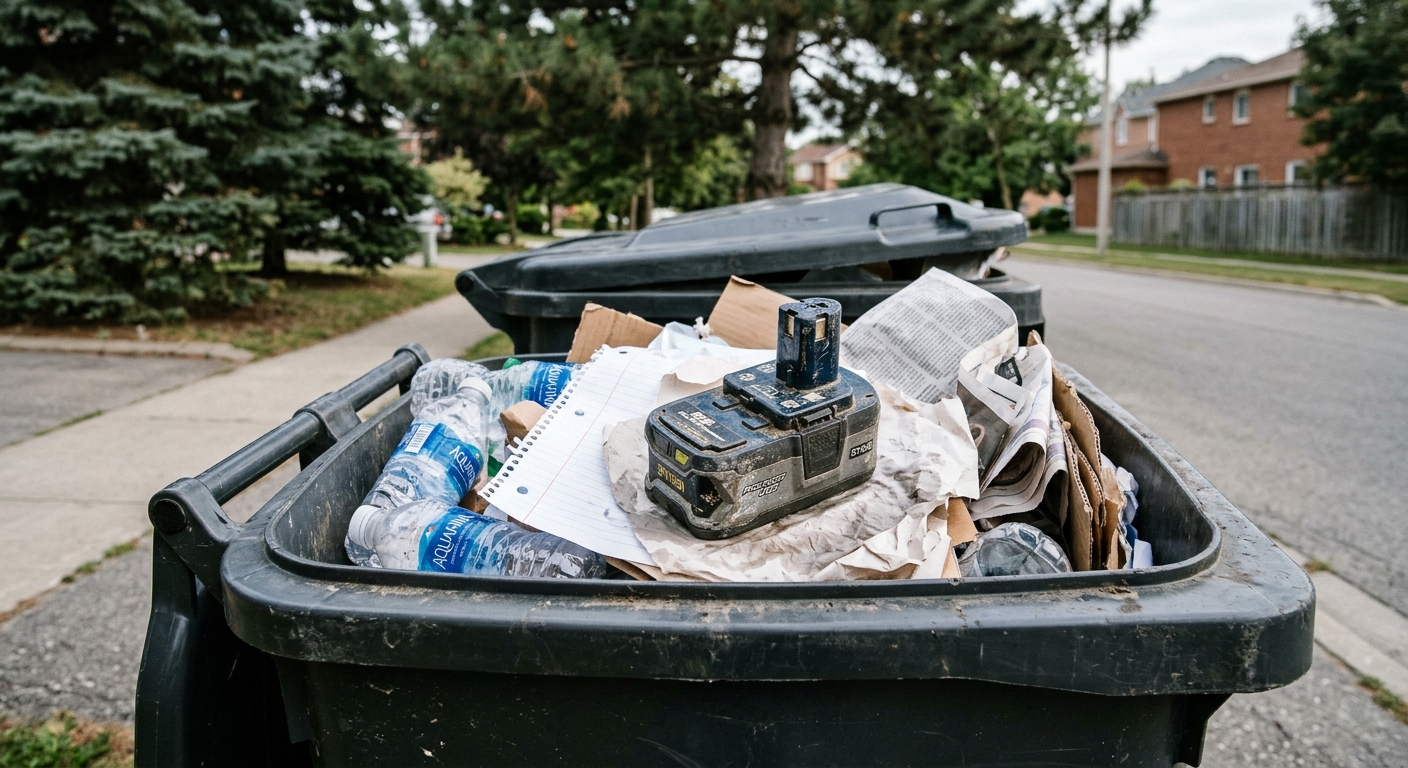
AI-generated illustration; not a photograph of the reported event.
- calendar_today October 28, 2026
The Dangers of Improper Lithium-Ion Battery Disposal
Disposing of lithium-ion batteries in household trash is a serious safety hazard, according to local waste management and fire officials. These rechargeable batteries, commonly found in devices such as power tools, vapes, and large electronics, have caused multiple garbage truck fires in the community.
Battery Fires: A Growing Problem for Waste Management
Rachele Klein of Republic Services revealed that in the past year, there have been four to six truck fires attributed to lithium-ion batteries discarded in regular trash. Some incidents have resulted in loss of entire vehicles, raising significant concerns for worker safety and community risk. Klein stressed the ongoing dangers these batteries pose if not properly separated from household waste.
How Lithium-Ion Batteries Start Fires
Roy Mitchell, Boise Fire Division Chief of Special Operations, explained that fires often start when garbage trucks compress waste containing lithium-ion batteries. If a battery is damaged during this process, it may go into a condition known as thermal runaway, leading to a rapid and intense fire. Boise Fire recently held a demonstration to highlight just how reactive and dangerous these batteries become when compromised.
Mitchell noted, "It doesn’t take a long time from the moment it gets damaged to the point where it goes into thermal runaway." The swift reaction emphasizes the hazard faced by waste management personnel and bystanders alike.
Understanding the Scale: From Single Cells to Large Devices
While a single lithium-ion cell can cause significant problems, Mitchell pointed out that devices such as scooters may contain 30 or 40 cells, and electric vehicles may hold up to 7,000. The potential scale of a battery fire increases dramatically when multiple cells are present, underscoring the importance of safe disposal practices.
Proper Disposal: Keeping Communities Safe
Unlike regular alkaline batteries (such as 9-volts or AAs, unless they are rechargeable), lithium-ion and other rechargeable batteries should never go in the trash. Instead, residents are urged to take these batteries to hazardous household waste collection sites or the designated drop-off at the Ada County Landfill. This step helps prevent garbage truck fires and protects both workers and the wider community from needless risk.
Community Safety and Battery Disposal Awareness
The recent incidents and demonstrations by Republic Services and Boise Fire highlight the pressing need for battery safety education and effective waste management policies. Protecting homes and neighborhoods starts with each resident understanding the dangers and following proper battery disposal guidelines.
If you have questions about safe disposal or want to learn more, Boise Fire encourages residents to use local hazardous waste programs rather than risk dangerous fires by mixing batteries with household trash.
Source: kivitv.com.


