- calendar_today August 8, 2025
As 2025 unfolds, Idaho’s housing market is mirroring national trends but with a distinctly regional tone. Homebuyers in cities like Boise, Idaho Falls, and Twin Falls are recalibrating expectations amid lingering affordability challenges and tighter inventory. While mortgage rates have stabilized compared to the highs of 2022–2023, they remain elevated enough to influence buying power, especially among first-time buyers and younger families relocating from other states.
Affordability has become a growing concern, even in rural areas once considered budget-friendly. Despite cooling slightly from the peak pandemic years, home prices in Idaho remain well above pre-2020 levels. This is driving more buyers toward suburban or exurban areas, where they seek value without sacrificing too much on commute times or lifestyle amenities.
Housing inventory in Idaho remains constrained, though slightly improved from recent lows. Builders across the state are cautiously increasing output, but high material costs and labor shortages continue to act as bottlenecks. In places like Meridian and Coeur d’Alene, the pace of new construction is increasing—but not enough to significantly offset demand.
Moreover, many homeowners who locked in ultra-low mortgage rates during the pandemic remain hesitant to sell. This “rate lock-in” phenomenon continues to suppress inventory turnover, resulting in fewer move-up buyers and longer average time spent in current homes.
Mortgage Rates and Buyer Timing Strategies
Although mortgage rates have stabilized, most Idaho buyers are still keenly sensitive to small fluctuations. A 0.25% change in rates can influence decisions around locking in a loan or delaying a purchase. Buyers in 2025 are showing more willingness to wait for price adjustments or more favorable conditions, reflecting a cautious but informed market mindset.
This has also led to an increase in adjustable-rate mortgage (ARM) usage in certain segments, especially among buyers betting on future rate drops. Real estate professionals across Idaho report longer decision-making timelines and more price negotiations as buyers weigh their financial margins.
Urban Flight and Regional Movement
Pandemic-era trends that drove large numbers of out-of-state buyers to Idaho—particularly from California and Washington—have evolved but not disappeared. In 2025, migration into Idaho continues, albeit at a more moderate pace. What’s changed is the profile of these newcomers: many are remote professionals or retirees seeking smaller cities with lifestyle appeal, affordability, and open space.
Boise and its surrounding suburbs still attract significant interest, but smaller markets like Pocatello and Rexburg are seeing renewed activity as well. These areas offer relatively lower housing costs and access to nature, making them attractive to those fleeing higher-cost metros.
Construction Trends: Prioritizing Affordability and Sustainability
Homebuilders in Idaho are adapting to new economic realities by shifting focus toward smaller, more energy-efficient homes. This aligns with both affordability goals and growing demand for sustainable living options. Modular construction, energy-saving materials, and flexible zoning developments are gaining ground in local planning departments.
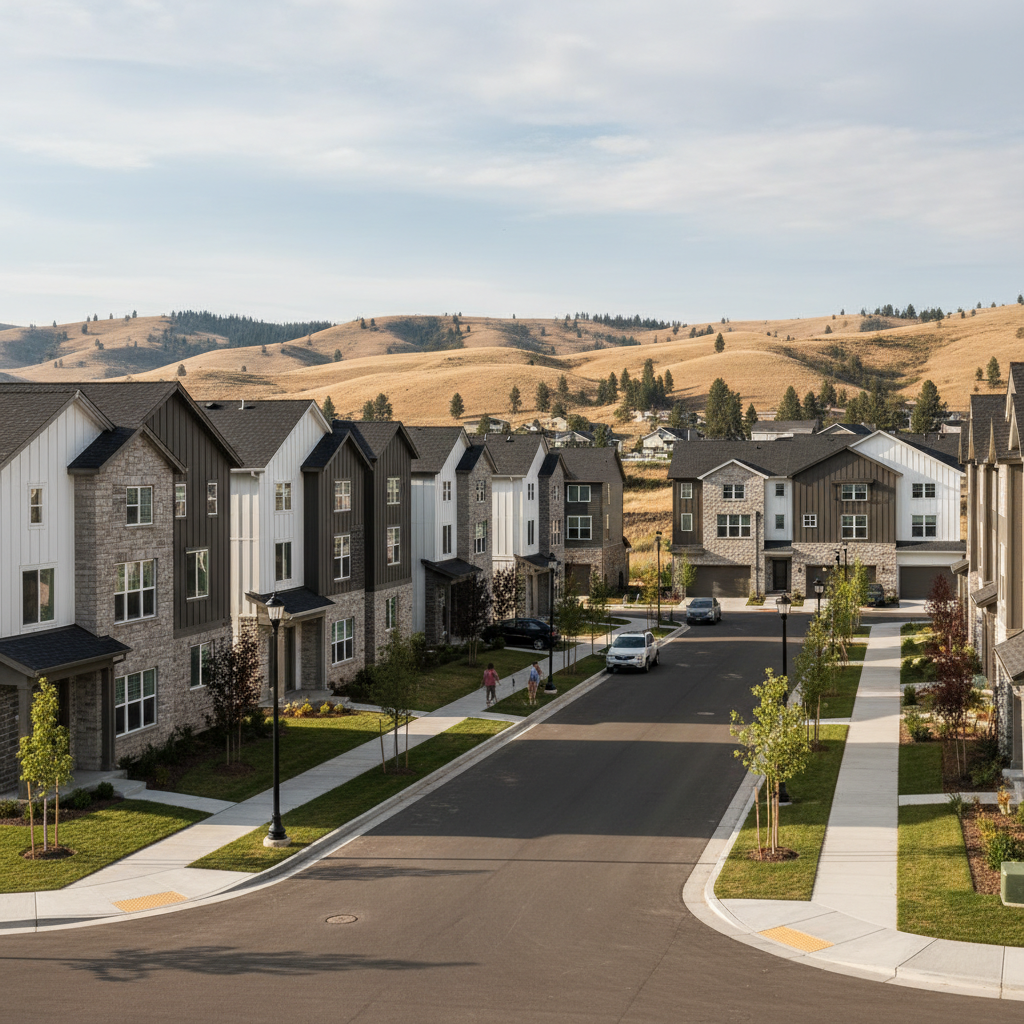
In cities like Nampa and Caldwell, developers are working closely with municipalities to approve mid-density housing that meets the needs of both growing families and aging residents looking to downsize. The emphasis on “missing middle” housing—duplexes, townhomes, and low-rise apartments—is seen as one solution to Idaho’s affordability challenges.
Remote Work and Lifestyle Shifts Shape Demand
Remote and hybrid work remain key forces behind housing demand in Idaho. Many buyers continue to prioritize homes with dedicated office space, high-speed internet, and proximity to outdoor recreation rather than traditional employment centers.
This is particularly evident in areas like McCall and Sandpoint, where second-home demand and telecommuting-friendly neighborhoods are driving niche market growth. Idaho’s appeal as a lifestyle destination is shaping not only buyer preferences but also the types of properties in demand.
Rental Market Remains Strong
The rental sector in Idaho has remained resilient throughout 2024 and into 2025. High home prices and mortgage costs have led some potential buyers to remain renters longer than anticipated. This trend is especially prominent in university towns such as Moscow and Rexburg, as well as in Boise where demand for multifamily housing is outpacing supply.
Developers are responding by investing in build-to-rent communities and multifamily projects, with a focus on affordability and amenities. Investors, both local and out-of-state, are watching Idaho closely as a long-term growth market for rental yields.
Local Policy and Housing Affordability
Idaho lawmakers and local governments are gradually responding to housing affordability issues. Cities are exploring zoning reforms, offering incentives for affordable housing, and debating property tax adjustments aimed at easing burdens for longtime residents.
While large-scale legislative changes have yet to materialize, local municipalities are more engaged in housing discourse than in previous years. This reflects the growing understanding that market forces alone won’t solve Idaho’s housing imbalance without targeted policy support.