- calendar_today August 12, 2025
.
In recent years, Washington and New Delhi developed what many considered one of the most robust and enduring strategic partnerships of the post–Cold War era. That relationship is in peril now, facing one of its most trying moments since the U.S. and India first began formal diplomatic relations in the late 1940s, battered by trade friction, oil politics, and the pressures of global realignment.
“The trust is gone,” Evan Feigenbaum, a South Asia expert at the Carnegie Endowment for International Peace, said in an interview. “We’re in a situation in the U.S.-India relationship where the premises and assumptions of the last 25 years — that everybody worked very hard to build, including the president in his first term — have just come completely unraveled.”
The relationship has deteriorated in recent months in the wake of President Donald Trump’s decision to levy broad tariffs on Indian imports in response to New Delhi’s refusal to halt its purchase of Russian oil despite Moscow’s ongoing war in Ukraine. Trump first imposed a 25 percent tariff on Indian goods in June, which will increase to 50 percent on August 27 if India does not change its buying patterns.
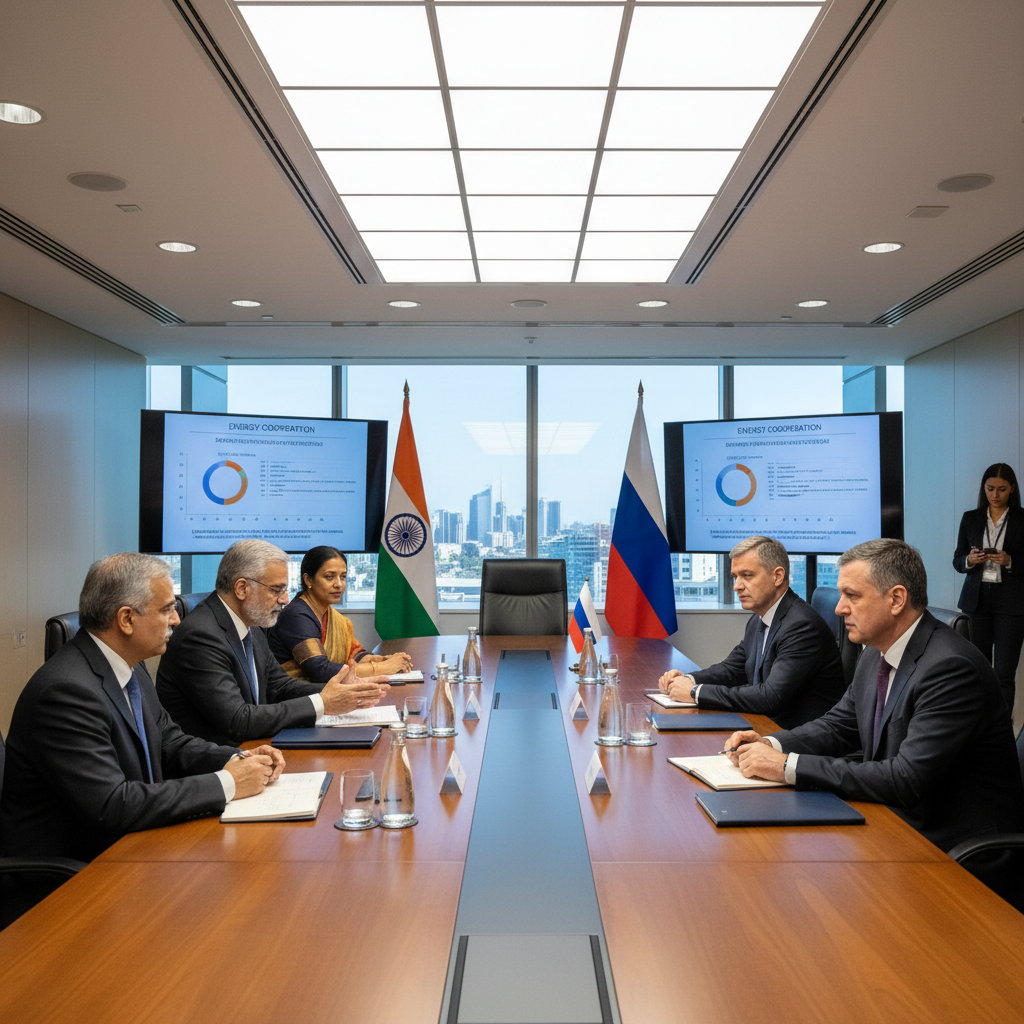
Far from heeding Washington’s call to diversify its energy mix, India has doubled down on Russian oil and made significant diplomatic overtures to Moscow. The country’s national security adviser visited Russia earlier this month, Foreign Minister Subrahmanyam Jaishankar met with Russian officials last week, and Chinese Foreign Minister Wang Yi recently completed a trip to New Delhi.
In the coming months, Indian Prime Minister Narendra Modi is expected to travel to China for the first time in more than seven years, and Russian President Vladimir Putin is scheduled to welcome Modi in Moscow before the end of the year. Analysts say the significance of these moves goes well beyond symbolic diplomacy.
Indians are turning sharply against what they see as American interference in their sovereign right to choose energy and other trading partners, Feigenbaum said. “They’re signaling very clearly that they view that as interference in India’s foreign policy, and they are not going to put up with it,” he said.
After initial reluctance early in the war, state-owned refiners restarted Russian crude imports after discounts of 6 to 7 percent. As a result, India’s imports from Russia have spiked: Moscow now accounts for 35 percent of the country’s crude oil imports, compared to 0.2 percent before the Ukraine war. Russia, for its part, is stepping up the offer, Deputy Prime Minister Denis Manturov said in an interview. “We will continue to supply crude, oil products, thermal and coking coal,” Manturov told CNBC. Russia also sees “potential for the export of Russian LNG.”
An Eastern Shift
That India is pivoting east is not, however, the sole result of Trump’s tariffs. “We’ve seen indications for almost a year of India wanting to ease tensions with China and strengthen relations, mainly for economic reasons,” Michael Kugelman, a South Asia analyst in Washington, said. “But the Trump administration’s policies have made India want to move even more quickly.”
New Delhi’s diplomatic moves may have been partly performative, Kugelman and Feigenbaum said. But many others will not be easily undone. “India is going to double down on some aspects of its economic and defense relationship with Russia — and those parts are not performative,” Feigenbaum said.
India’s military imports from Russia had already been declining for years before the Ukraine war, as it began to source more advanced U.S., French, and Israeli weapons. But once the invasion began, trade in Russian energy has exploded. Kugelman said that suggests New Delhi believes “the U.S. can’t be trusted, whereas Russia can — because Russia is always going to be there for India no matter what.”
Moscow also benefits politically from its oil diplomacy with India. Modi has staked out his firm support for the Russian invasion, both to sustain the neutrality of his right-wing constituency at home and to mark a sharp break from the U.S. and NATO position. The leader has also been eager to advertise his efforts to prioritize the livelihoods of India’s farmers, small business owners, and young workers as they face economic headwinds at home. Kugelman said Modi had already given in on many of the U.S.’s key asks. “India had already compromised, given in on so many things to the United States on reducing tariffs, repatriation of workers,” he said. “Because of those concessions, India needs to be careful about signaling further willingness to bend. This is one reason there was no trade deal — Modi put his foot down.”
In Washington, outrage is building. “India’s opportunistic purchasing of Russian oil is deeply corrosive,” Peter Navarro, a former White House trade adviser, wrote this week in the Financial Times. “The answer is to start targeting India with tariffs, hitting them where it hurts — its access to U.S. markets — even as it seeks to cut off the financial lifeline it has extended to Russia’s war effort.”
The current breakdown comes after a high-water mark in 2008, when the two countries signed a landmark civil nuclear agreement. That deal was among the first of its kind for a country that had not signed the Non-Proliferation Treaty, allowing India access to U.S. fuel and technology while keeping intact the country’s nuclear weapons program. At the time, both sides were able to compartmentalize their differences enough that they did not interfere with cooperation in other areas.