- calendar_today August 10, 2025
OpenAI has launched “Images in ChatGPT,” a groundbreaking function that brings image creation capabilities into the ChatGPT platform. The introduction of the GPT-4o model enables users to produce images during their chat interactions, which represents a major milestone in AI content creation.
Users of all ChatGPT plans—Free, Plus, Pro, and Team—can now access the new image generation feature to expand the availability of advanced visual creations. OpenAI spokesperson Taya Christianson revealed that free tier users face similar limitations as DALL-E 3, where they can generate three images per day, but mentioned that these constraints might change according to user demand. A special custom GPT will ensure continued access for DALL-E fans.
OpenAI’s research lead Gabriel Goh called attention to GPT-4o’s groundbreaking capabilities as an “omnimodal” model designed to process multiple data formats, including text, images, audio, and video. The model now features improved “binding” capabilities, which solve a longstanding problem in AI image generation. GPT-4o now reliably processes up to 20 objects without mixing colors or shapes, unlike earlier models, which misinterpreted object-attribute relations.
The system’s enhanced text rendering stands out as one of its key advancements. AI-generated images have typically exhibited issues with distorted or nonsensical text rendering. Goh explained that developing this system required extensive iterative work, which spanned several months to perfect. The team has successfully achieved consistent text rendering for images, which ensures usability despite the ongoing challenge of perfecting small text representation.
The system’s architecture diverges from standard image generator diffusion models to implement an autoregressive methodology. The technique that produces images in a sequential left-to-right and top-to-bottom pattern is believed to enhance text rendering and binding performance because it parallels text generation methods.
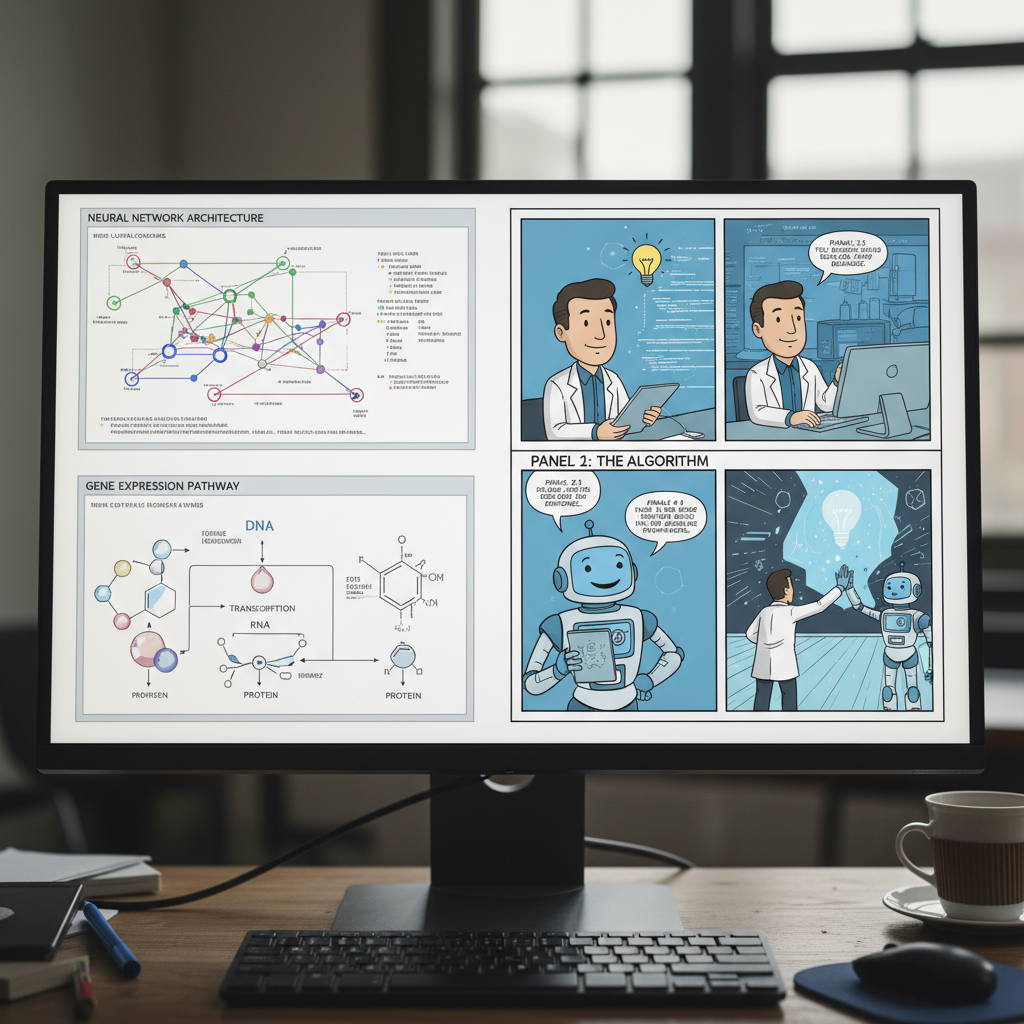
OpenAI presented a demonstration of their system’s capabilities through diverse applications, which showed scientific diagrams with precise labels like Newton’s prism experiment and multi-panel comics with consistent characters and dialogue alongside informational posters containing accurate text. The presentation included practical demonstrations of how to create transparent background images for various items like stickers, restaurant menus, and logos.
The system’s multimodal product lead, Jackie Shannon, explained how it uses accumulated world knowledge. She explained that when she draws images, she works within the bounds of her personal abilities but incorporates her entire acquired knowledge base. The model incorporates world knowledge into its functionality, which allows users to obtain an image of Newton’s prism experiment without needing to provide any additional information.
According to OpenAI, the longer image generation takes because of improved quality and capabilities makes the wait worthwhile. Shannon acknowledged our latency improvement needs but emphasized that the advanced image quality and world knowledge features compensate for extended waiting times.
Addressing Ethical Concerns and Ensuring Responsible Deployment
OpenAI answered concerns about possible misuse by highlighting its implementation of strong security measures. The system incorporates protections to stop watermark removal while blocking sexual deepfake creation and rejecting CSAM requests. OpenAI designs its generated images to contain standard C2PA metadata to identify them as its creations even without visual watermarks. The company operates internal tools that verify images.
No system achieves perfection in this realm, but our safeguards get better every day, and this represents our initial approach, Shannon explained. Users who generate images through ChatGPT maintain ownership and have full rights to use those images according to OpenAI’s usage guidelines.
OpenAI improves its main product’s capabilities through “Images in ChatGPT,” while establishing new benchmarks for user-friendly and advanced AI image creation. OpenAI demonstrates its dedication to responsible tool deployment by focusing on enhanced binding capabilities alongside improved text rendering and strong protection mechanisms. The company’s innovative image generation strategy emerges from its decision to move away from traditional diffusion models by adopting an autoregressive approach. OpenAI demonstrates its dedication to ethical AI use and transparency by making user ownership and metadata integration central to AI content development. The integration serves as a major advancement towards making advanced AI image creation accessible to all users while also tackling potential risks to provide a safer user experience.