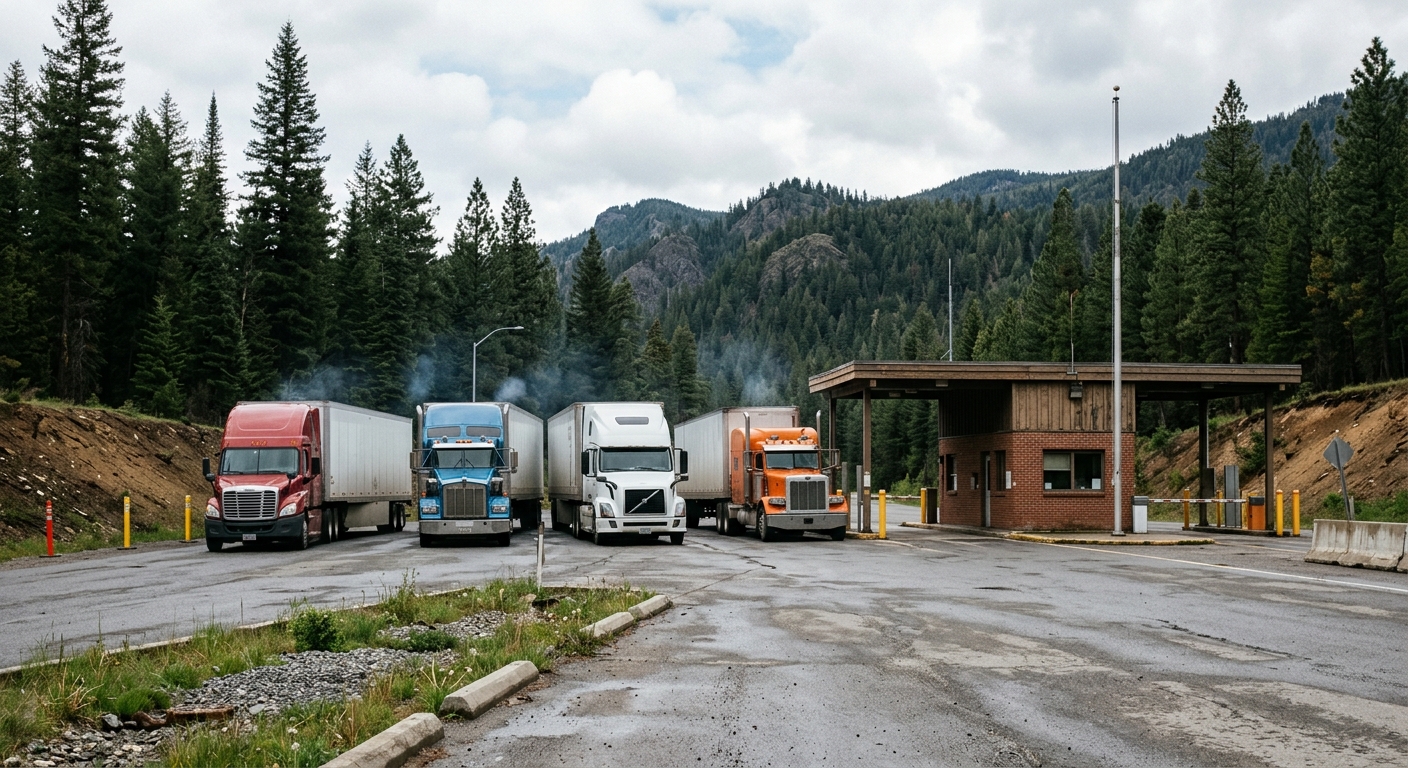
AI-generated illustration; not a photograph of the reported event.
- calendar_today August 23, 2026
Communities across Idaho are watching closely as the Canada-US trade dispute intensifies, following the United States’ decision to levy a sweeping 50% tariff on $20 billion worth of Canadian goods. The move, which has sent ripples throughout cross-border economies, underscores the tense economic climate developing between two major North American partners.
Rising Tensions Following Breakdowns in Trade Negotiations
This latest escalation stems from failed trade negotiations between the countries. Analysts say recent demands from Washington, viewed in Ottawa as oversteps on matters of economic sovereignty, were pivotal in triggering the dispute. Mark Carney, Canada’s Prime Minister, has responded by pledging an equivalent trade retaliation to mirror the American tariffs—a clear sign that Canadian leadership is taking a strong stand despite the economic risks involved.
Idaho’s Stake in the Canada-US Trade Dispute
The impact of this trade conflict reaches beyond national borders, directly affecting regional economies like Idaho, which rely on integrated North American supply chains. Businesses in Idaho frequently interact with Canadian counterparts, meaning that the introduction of canada tariffs and us tariffs may disrupt everything from agriculture to manufactured goods.
Mark Carney’s Vision for Economic Resilience
Prime Minister Mark Carney has framed the situation as a test of Canada’s commitment to both economic resilience and political independence. Speaking from Ottawa, Carney emphasized that “middle powers” such as Canada must not yield to us economic pressure—a sentiment resonating strongly with Canadians who are wary of external coercion, particularly from dominant economies.
Challenges of Economic Dependency
Canada’s reliance on its southern neighbor is substantial, with almost three-quarters of canadian exports destined for U.S. markets. Experts warn this leaves Canada in a uniquely vulnerable position. However, Carney argues that standing up to economic intimidation could set a precedent for other middle powers navigating the complexities of global trade—an argument that resonates among smaller economies in Idaho and elsewhere, seeking fairer participation in cross-border commerce.
Public Sentiment and National Sovereignty
The dispute has sparked notable solidarity across Canadian society, reflective of deep concern for trade sovereignty. Public support for a firm governmental response runs high, with many Canadians—alongside policy watchers in Idaho—viewing the event as more than a mere commercial squabble. Instead, it is regarded as a crucial test of independence amid shifting global trade alliances and rising protectionist policies.
Regional Implications and Looking Ahead
For Idaho and its partners across the Pacific Northwest, the reverberations of the canada us trade dispute are unmistakable. Local businesses that depend on stable, predictable trade with Canadian suppliers now face months of uncertainty. Meanwhile, both Canadian and American officials brace for economic consequences, while the broader North American trade landscape awaits new strategies that may redefine international cooperation or competition in the months to come.
With retaliation measures set to begin September 8, regional stakeholders are preparing for a period marked by tariff adjustments, shifting market access, and renewed efforts to safeguard economic sovereignty. As this trade conflict unfolds, the choices made by Canada under Carney—and their ripple effects in places like Idaho—will likely influence how middle powers around the world react to economic pressure from larger nations in the coming years.