- calendar_today August 11, 2025
Idaho’s Homeowners and Businesses Get Used to Interest Rate Halt as They Wait for Potential Rate Cuts
Idaho reacts to the Federal Reserve’s interest rate pause decision, as businesses and homeowners cope with increased costs and wait for expected rate cuts.
The Federal Reserve’s latest move to hold its current interest rate band is impacting Idaho communities and industries. While the benchmark rate remains between 5.25% and 5.50%, the time-out has far-reaching effects on businesses, residents, and consumers. Despite the central bank signaling prospects of two cuts in the later part of this year, Idahoans are already exposed to high borrowing prices in critical sectors such as agriculture, real estate, and small business activities.
Idaho’s Economy Adapts to Rising Borrowing Costs
Idaho’s varied economy, with robust agriculture, tech, and manufacturing industries, is seeing the ripple effect of the Federal Reserve’s action. Paying high interest rates makes borrowing more expensive, affecting business expansion as well as consumer expenditures.
Boise local economist Rachel Thompson described the impact on financial choices. “As long as the Federal Reserve keeps rates high, companies pay more for loans, and consumers are reducing discretionary spending,” she said. “If rates decline later this year, it may relieve financial stress on households and spur local growth.”
Agricultural Sector Undergoes Financial Pressure
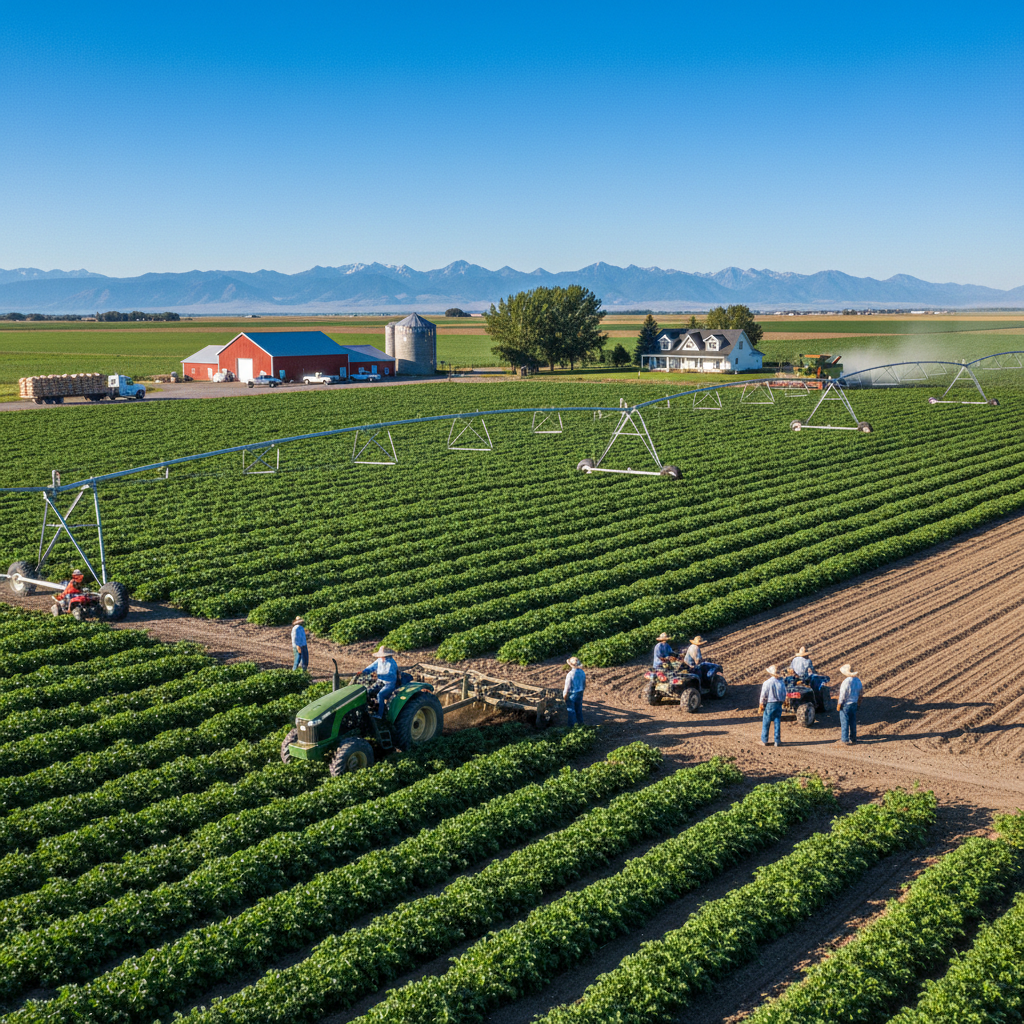
Agriculture continues to be a pillar of Idaho’s economy, as the state is a top producer of potatoes, dairy, and wheat. Farmers and ranchers tend to rely on loans to fund equipment, seeds, and day-to-day operations. The sustained high interest rates are making it more costly to sustain and increase agricultural production.
In Twin Falls, dairy farmer Jim Wallace explained how the Federal Reserve’s slowdown impacts his operation. “We use loans annually for feed and equipment,” he said. “With interest rates remaining high, those expenses mount rapidly. If rates fall later this year, it will bring much-needed relief.
Many in the farming sector are closely observing for any indication that the Federal Reserve will proceed with the anticipated rate cuts.
Idaho’s Housing Market Is Hit By It
The state’s real estate market is also reacting to the Federal Reserve action. Idaho in recent years has experienced a boom, particularly in cities such as Boise and Coeur d’Alene, as individuals from other states are moving there. But with mortgage rates still high because of the pause in interest rates, the affordability of homes is becoming a problem.
Boise real estate agent Kelly Summers observed the change in consumer behavior. “More expensive mortgage rates translate into higher monthly payments, which is making some prospective buyers sit on the sidelines,” she said. “If the Federal Reserve cuts rates later this year, it will spark the market by making home loans cheaper.”
Homebuyers and builders are taking a wait-and-see approach for now, anticipating relief through interest rate cuts down the road.
Idaho Small Businesses Acclimatize to the New Conditions
Idaho’s small businesses, which form the backbone of the local economy, are also acclimatizing to the implications of the Federal Reserve’s rate halt on costs. They all depend on financing for inventories, equipment, and growth initiatives, and the prevailing interest rate conditions are forcing them to find it increasingly difficult to invest in growth.
In Pocatello, Lisa Nguyen, who owns a coffee shop, explained how increasing borrowing costs influence her business strategy. “We wanted to open up a second location this year, but the loan payments would be too expensive now,” she explained. “If the Federal Reserve reduces rates later, it might make expansion a possibility.”
Small business leaders are calling on policymakers to take into account the effects of prolonged high interest rates on Idaho economies and are optimistic about rate reductions to spur entrepreneurship.
Consumer Spending Constricts Throughout Idaho
Outside of businesses, average Idahoans are also experiencing the pinch of increased borrowing expenses. Credit card interest rates and personal loan rates are higher, prompting many families to rein in discretionary expenditures.
In Idaho Falls, teacher Daniel Reed explained how rising costs are affecting his family. “We’re paying more for everything—from groceries to credit card bills,” he said. “A rate cut would make a real difference in helping us keep up with expenses.”
Local businesses that rely on consumer spending, like retail stores and service providers, are watching trends closely as households cut back on non-essential purchases.
The Road Ahead for Idaho’s Economy
Although the Federal Reserve’s resolution to keep interest rates at present levels is problematic, the potential for two rate reductions later this year is a source of optimism for many industries throughout Idaho. Reduced borrowing rates would ease financial stress for consumers, homebuyers, and businesses.
Experts indicate that the state’s economic future hinges on the speed at which the Federal Reserve acts upon those reductions and how Idahoans adjust in the interim.
For the time being, the Gem State stays strong, working its way through the nuances of a high-interest-rate world with its eyes set toward possible financial respite in the months ahead.