- calendar_today August 13, 2025
Idaho CRE in 2025: A Resilient Market Driven by Migration and Industry
In 2025, Idaho’s commercial real estate (CRE) landscape reflects the unique strengths of a state that continues to grow against the odds. As national CRE markets wrestle with lingering inflation and tighter lending conditions, Idaho is standing out for its population gains, expanding industrial base, and evolving suburban demand.
The Boise metro area continues to anchor the state’s real estate activity, but secondary cities like Meridian, Idaho Falls, Coeur d’Alene, and Twin Falls are drawing investor interest, especially in multifamily and industrial sectors. With a growing number of in-migrants from states like California, Oregon, and Washington, Idaho’s market is transforming from niche to notable.
Industrial Real Estate: Boise and Beyond See Strong Logistics Momentum
Idaho’s industrial market is among the state’s most robust commercial sectors in 2025. Demand for warehousing, distribution, and light manufacturing space is being driven by population growth, regional e-commerce expansion, and reshoring initiatives.
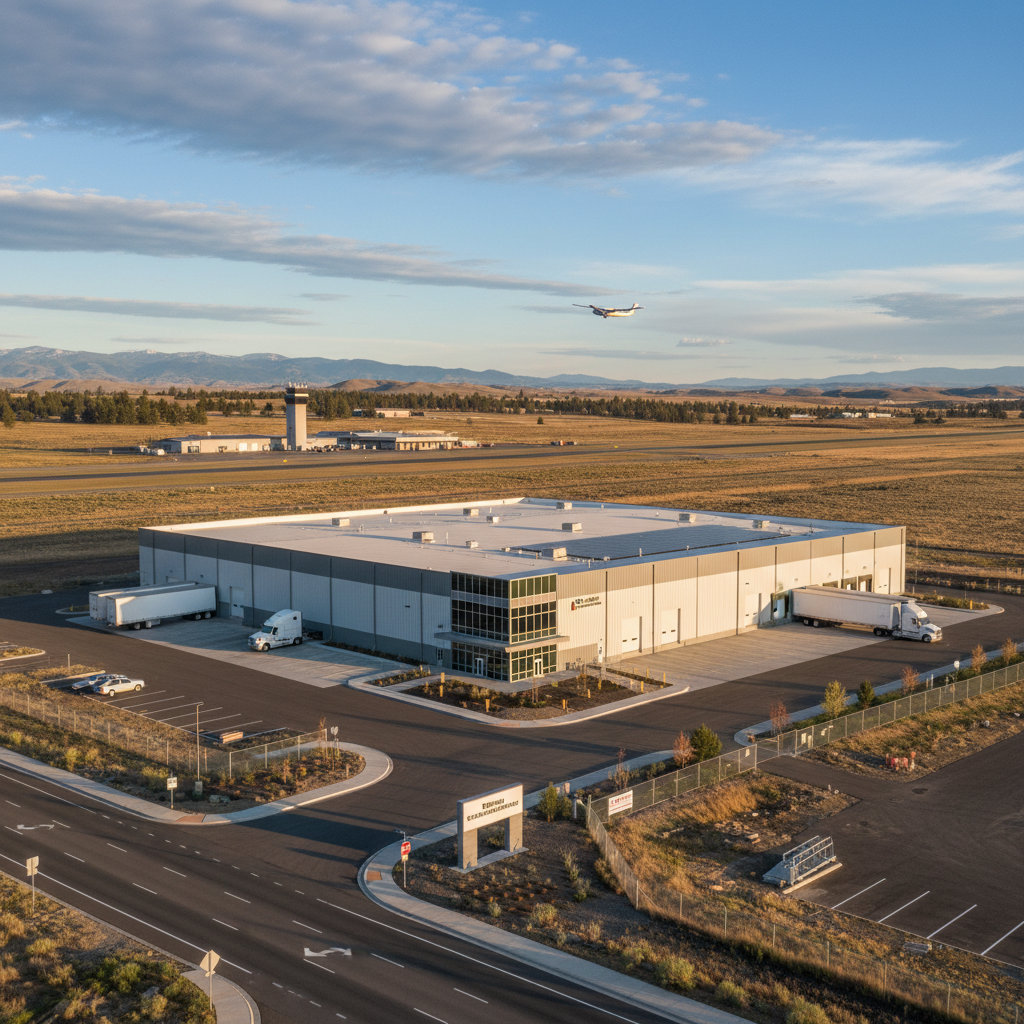
The Boise Airport industrial submarket, in particular, is thriving due to proximity to transportation infrastructure. Developers are breaking ground on build-to-suit facilities for food processing, advanced manufacturing, and logistics providers—especially those supporting agriculture and cold-chain supply.
Nampa and Caldwell have emerged as attractive alternatives for industrial users seeking affordable land and newer space. Across the Treasure Valley, industrial vacancy remains under 4%, and lease rates are up 6.8% year-over-year.
Meanwhile, Twin Falls—home to Chobani and other food processors—is quietly expanding its industrial base, supported by the Snake River manufacturing corridor. Idaho Falls is also leveraging federal investment into energy research and nuclear innovation to attract industrial tech players.
Multifamily: Strong Demand and Rising Costs Shape New Development
With Idaho’s population surpassing 2 million in 2025 and the Boise metro alone nearing 850,000, multifamily housing demand remains high—particularly in Ada and Canyon counties.
Skyrocketing home prices in recent years have locked out many would-be buyers, pushing them into the rental market. As a result, Class B and Build-to-Rent (BTR) properties are seeing the strongest absorption, especially in Meridian, Kuna, and Eagle.
Boise’s urban core continues to attract young professionals and remote workers, keeping Class A apartment demand high. Yet developers are cautious amid construction cost pressures and stricter zoning requirements. Rent growth has moderated to 3–4% annually, but vacancy remains low—hovering around 5.2% statewide.
In Coeur d’Alene, rising tourism and out-of-state migration are fueling demand for multifamily development near the lakefront and medical corridor. Idaho Falls and Pocatello, both buoyed by regional universities and medical hubs, are also seeing moderate but stable rental demand.
The challenge in 2025 is twofold: delivering enough rental units without pricing out residents, and navigating development bottlenecks from materials shortages and limited subcontractor labor.
Office: Smaller Spaces, Suburban Shift, and Flex Demand
Idaho’s office market in 2025 is adjusting to post-pandemic realities. Boise’s CBD office vacancy has climbed to 15%, but this is largely due to national tech firms scaling back their footprints. On the other hand, suburban office demand in Meridian and Eagle is resilient, especially among regional law firms, health providers, and engineering firms.
Flex office providers are expanding into Nampa and Twin Falls, capitalizing on hybrid work models and small business growth. Coworking operators, once limited to Boise, are now entering Idaho Falls and Coeur d’Alene as remote professionals seek shared space outside the home.
Medical office space remains a top performer. Near St. Luke’s Boise, Eastern Idaho Regional Medical Center, and Kootenai Health, new MOB projects are attracting long-term leases and investor attention. Developers are increasingly incorporating wellness features, energy-efficient design, and flexible floorplans to future-proof properties.
Overall, Idaho’s office sector may not be booming, but it’s adapting—trading size for efficiency, and urban centrality for convenience and parking.
Retail: Local Brands, Suburban Growth, and Experience-Led Revival
Idaho’s retail CRE sector in 2025 is undergoing a localized transformation. Large malls and national chain retailers are taking a backseat to community-driven retail centers and mixed-use developments.
Grocery-anchored centers in Meridian, Chubbuck, and Post Falls are seeing strong leasing activity, especially from quick-service restaurants, health clinics, and boutique fitness brands. Retailers with experiential offerings—such as climbing gyms, farm-to-table restaurants, and locally curated shops—are outperforming traditional formats.
Downtown Boise’s 8th Street corridor remains a focal point for restaurants and nightlife, although landlords are offering more flexible lease terms to attract new concepts. Retail vacancy across the state is steady at around 6.2%, with upward pressure on rents in high-growth suburbs.
Investors are taking a targeted approach, focusing on neighborhood retail with essential services rather than speculative big-box space. Retail development is also being integrated into residential master plans, supporting walkability and placemaking.
Regional Investment Trends: Growing Interest in Secondary Markets
In 2025, institutional and regional investors are turning their eyes to secondary and tertiary Idaho markets where cap rates remain attractive and growth potential is substantial.
Twin Falls, with its stable food manufacturing sector and expanding airport, is seeing increased investment in flex industrial and workforce housing. Idaho Falls, anchored by Idaho National Lab and healthcare infrastructure, is gaining attention for its innovation economy and affordability.
In Coeur d’Alene, the intersection of tourism, health care, and housing scarcity is creating opportunities for mixed-use, retail, and rental development. The rise of remote work is also bringing high-income professionals to resort towns, increasing year-round demand for services and housing.
Even smaller cities like Sandpoint, Rexburg, and Hailey are attracting developers interested in adaptive reuse, boutique hospitality, and lifestyle-oriented retail projects.
Infrastructure, Zoning, and the Role of State Policy
Idaho’s pro-growth stance is a key reason behind its CRE resilience. In 2025, state incentives for industrial development, combined with local impact fee reforms, are helping to fast-track key projects—particularly in Canyon and Bonneville counties.
However, the state is facing growing infrastructure pressure. Water access, power grid reliability, and road congestion are becoming central concerns—especially in the Treasure Valley. Some municipalities are struggling to keep up with planning approvals, leading to permitting delays for new housing and commercial developments.
Transit remains limited, but the growing popularity of bike-friendly communities and walkable town centers is prompting cities like Boise and Idaho Falls to rethink mobility strategies as part of long-range development plans.
Outlook for 2025: Steady Growth Anchored in Fundamentals
Idaho’s commercial real estate market in 2025 reflects a story of calculated growth. The speculative booms of the early 2020s have given way to more targeted development, smarter capital deployment, and stronger alignment between demand and supply.
With robust population growth, an expanding industrial base, and vibrant secondary cities, Idaho remains one of the most resilient CRE markets in the Mountain West. The state’s challenge now lies in managing that growth—ensuring that infrastructure, housing, and community development keep pace with investor enthusiasm.