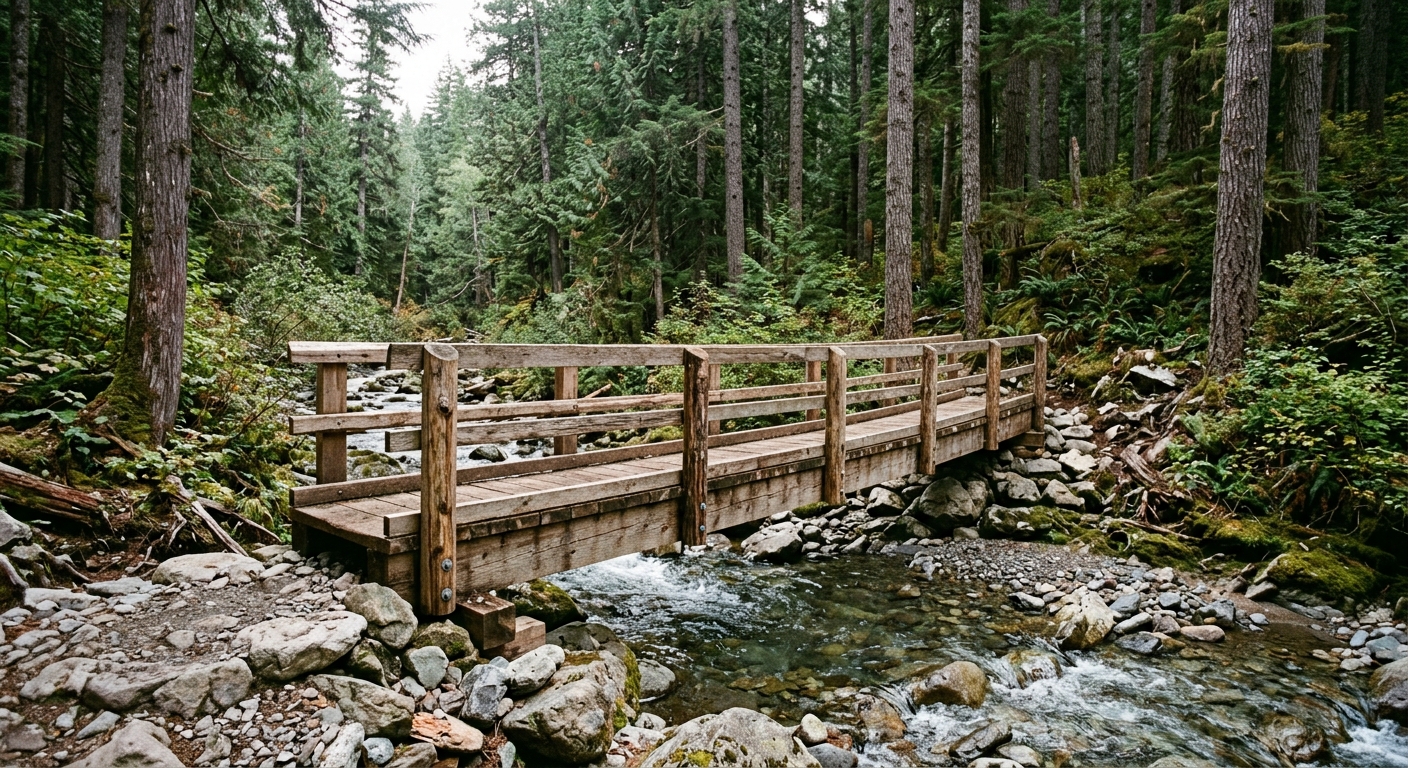
AI-generated illustration; not a photograph of the reported event.
- calendar_today September 20, 2026
The completion of the new Lake Creek bridge on the McCall Ranger District marks a significant milestone for recreation users and conservationists in Idaho. After three years without a crossing, the bridge once again enables safe trail access in the Payette National Forest, restoring a vital link along the Pete Creek Trail and safeguarding important habitats for native species.
Collaborative Effort Revives Critical Trail Link
Located in the heart of Idaho, the Lake Creek bridge project was spearheaded by the U.S. Forest Service in close partnership with the Idaho Department of Parks and Recreation as well as the Central Idaho Trail Riders Alliance. This bridge construction addressed the aftermath of destructive high waters, which washed out the old structure more than three years ago. The response highlighted the strength of local and agency partnerships in managing public land infrastructure.
Engineering Meets Manual Labor
The project’s complexity required the installation of four bridge stringers, each stretching an impressive 41 feet and weighing approximately 1,200 pounds. While heavy equipment was needed for precision placement, the majority of the work—building supports, decking, railings, and trail approaches—was completed by a combination of Forest Service staff and dedicated volunteers. Over a focused week, their volunteer efforts ensured structural safety and preserved the integrity of the surrounding ecosystem.
Restoring Trail Access for All Users
The Lake Creek bridge serves as a crucial crossing on the Pete Creek Trail, one of the more popular routes within the Payette National Forest. The trail attracts both motorized and non-motorized outdoor enthusiasts, reinforcing the bridge’s role in maintaining safe and inclusive trail access. By restoring this connection, local users and visitors once again have uninterrupted passage for recreation and nature appreciation. The commitment to trail maintenance underscores the ongoing need for cooperative stewardship of Idaho’s extensive trail networks.
Protecting Critical Chinook Salmon Habitat
Beyond recreation, the project played an essential part in ecological conservation. Lake Creek is home to spawning habitat for Chinook salmon, a species protected under the Endangered Species Act. By constructing the bridge with careful planning and community input, the collaborative team prevented harmful disruption to these sensitive waters. This approach ensured that essential wildlife resources were conserved even as human access was restored—a balance that remains central to public land management in the region.
Partnerships in Idaho Trail Stewardship
The new bridge stands as a testament to how effective partnerships between government agencies, local organizations such as the Trail Riders Alliance, and community volunteers can achieve lasting outcomes. Idaho Parks, along with the Central Idaho Trail Riders Alliance, contributed manpower and resources vital to completing the project. These volunteer efforts not only make trail improvements possible but foster a strong culture of stewardship—key to the long-term viability of Idaho’s outdoor recreation.
A Model for Sustainable Trail Projects
The Lake Creek bridge exemplifies how responsible bridge construction can meet diverse needs, from recreation and safe travel to habitat protection and youth engagement. The Forest Service and its partners demonstrated that trail maintenance projects can unite a region’s residents, safeguard environmental priorities, and open new possibilities for tourism and community involvement in Idaho.
With the bridge now open, the Payette National Forest and greater Idaho region celebrate a renewed commitment to both public access and ecological responsibility, preserving Lake Creek’s scenic and natural legacy for decades to come.