- calendar_today August 10, 2025
Idaho’s Housing Market Freeze in 2025: What’s Causing the Sudden Standstill?
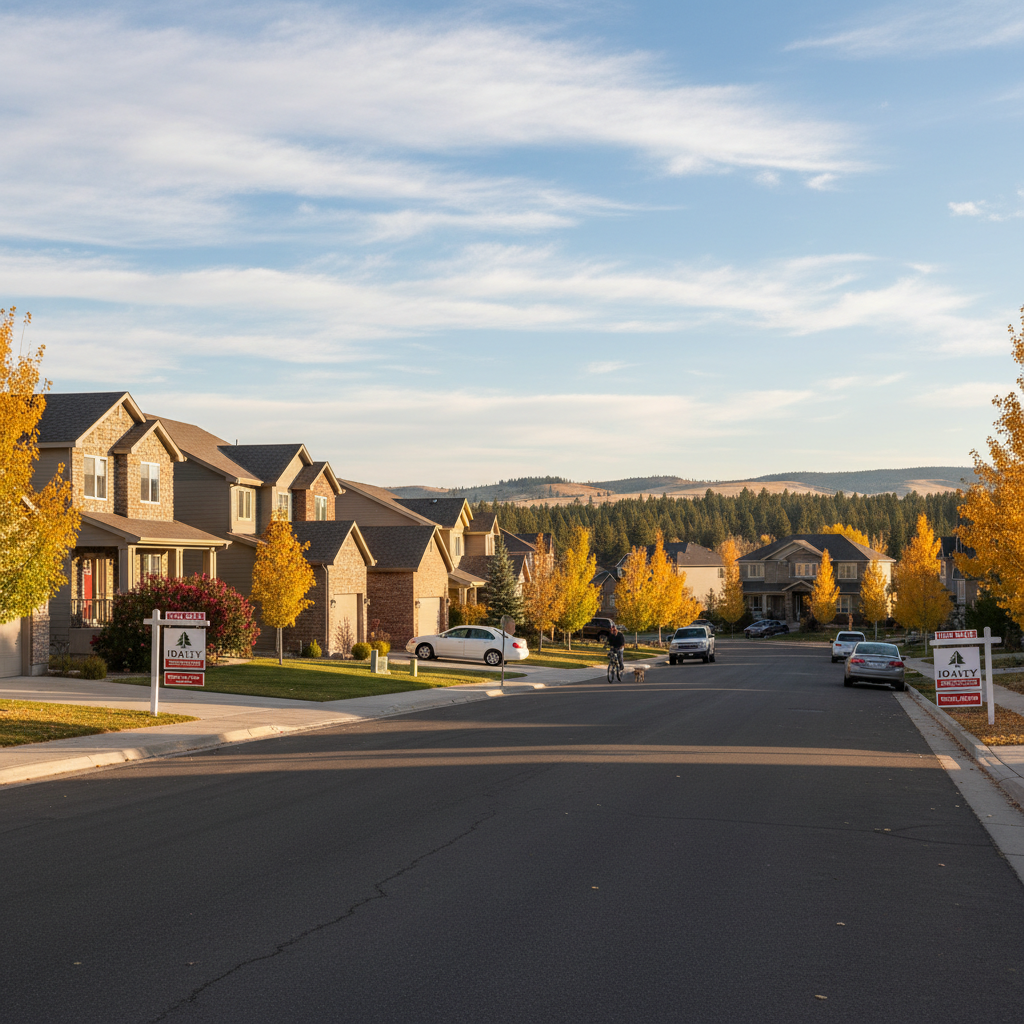
After years of breakneck growth, Idaho’s housing market has hit the brakes in 2025. Cities like Boise, Meridian, and Idaho Falls—once at the epicenter of the pandemic real estate boom—are now seeing fewer listings, stalled prices, and hesitancy on both sides of the transaction.
This isn’t just a seasonal slowdown or a response to mortgage rates. Idaho’s housing freeze is a multifaceted event shaped by affordability ceilings, overextended demand, demographic stabilization, and structural supply issues.
Home sales across Idaho have dropped significantly in 2025. According to the Idaho Housing and Finance Association, closed sales in the first half of the year are down 21% compared to 2024. In Ada County, the decline is even sharper at 27%, while neighboring Canyon County saw a 23% year-over-year decrease.
In northern Idaho, areas like Coeur d’Alene are seeing similar drops. “It’s like someone hit the pause button,” says Jennifer Walker, a real estate broker based in Kootenai County. “There are still buyers—just fewer of them—and they’re far more cautious.”
Boise’s Boom Has Flatlined
Boise, long considered one of America’s fastest-growing housing markets, is now at the forefront of Idaho’s freeze. Median home prices in the Boise metro have fallen 4.2% year-over-year, and inventory levels are rising—yet sales are not following suit.
What’s behind the reversal? A key reason is affordability. Home prices surged over 60% between 2020 and 2023, pricing out many locals. Even with recent corrections, the average home still costs around $460,000, a figure far above what the median Boise household can comfortably afford.
“People assumed Boise would keep appreciating forever,” notes housing analyst Devin Morales. “But that kind of exponential growth was never sustainable—especially not with interest rates near 7%.”
The Lock-In Effect is Real
One of the defining features of Idaho’s current housing freeze is the so-called “lock-in effect.” Thousands of homeowners who refinanced at ultra-low rates in 2020–2021 are unwilling to sell and give up their 2.5%–3% mortgages in favor of today’s 6.5%–7% rates.
This reluctance is keeping inventory low—but it’s not creating competitive bidding. Instead, the market is stuck. In Boise, the number of new listings fell 17% in Q2 2025, despite waning demand.
“It’s a standoff,” says Katie Linwood, a realtor in Nampa. “Sellers aren’t motivated, and buyers can’t afford the current prices and rates. Everything is just…stuck.”
Construction Has Slowed Dramatically
Idaho’s construction sector is also feeling the chill. New housing permits dropped by 22% statewide in the first half of 2025, according to the Idaho Building Contractors Association.
Builders are pulling back for several reasons: high materials and labor costs, softening buyer interest, and uncertainty about how long the freeze will last. In fast-growing cities like Twin Falls and Post Falls, previously greenlit developments are being delayed or downsized.
“Homebuilders are in wait-and-see mode,” explains Morales. “They’re not going to risk overbuilding in a market that’s cooling fast.”
Out-of-State Demand Has Waned
During the pandemic and into the early 2020s, Idaho experienced a surge of migration from California, Oregon, and Washington. Remote work made it possible for families to relocate, and Idaho’s relative affordability and open space made it a top destination.
But in 2025, that inflow has slowed considerably. Some companies are now requiring hybrid or in-person attendance again, and Idaho’s price advantage has shrunk. For buyers from the West Coast, Idaho no longer looks like the bargain it once was.
“People from Seattle or San Jose used to think Idaho homes were dirt cheap,” says Walker. “Now, they’re shocked at how expensive Boise or Coeur d’Alene has become.”
Income Growth Hasn’t Kept Up
One of the deeper issues driving Idaho’s housing freeze is the widening gap between home prices and household income. The state’s median household income is just over $75,000, yet even modest homes in Boise or Eagle often list above $450,000.
With mortgage rates at their current levels, the monthly cost to own has become prohibitive for many families—especially first-time buyers and local workers. As a result, more Idahoans are staying in rentals, moving back in with family, or simply waiting.
“There’s been a sharp shift in sentiment,” Linwood observes. “A lot of people no longer see real estate as the sure thing it was two years ago.”
Regional Breakdown: How Cities Across Idaho Are Reacting
Cities that are mostly affected by the slowdown:
- Boise Metro: Prices have softened slightly, but sales volume is way down. Inventory is rising, but homes linger longer on the market.
- Meridian & Eagle: High-end suburban homes are experiencing price cuts. Luxury market remains soft.
- Coeur d’Alene: Still desirable, but slowed by reduced out-of-state demand and local affordability strain.
- Twin Falls: Construction is slowing; fewer buyers competing for available inventory.
- Idaho Falls & Pocatello: Market is less volatile but showing signs of hesitation, particularly among younger buyers.
Mortgage Rates Are Still a Barrier
Despite modest efforts by the Federal Reserve to cool inflation and stabilize borrowing conditions, interest rates remain a formidable obstacle. As of mid-2025, Idaho buyers are still facing 6.7% to 7.2% rates on 30-year fixed mortgages, depending on creditworthiness and down payment size.
Even small reductions aren’t enough to fully reignite demand. “Rates would need to drop below 6% to make a significant impact,” says Morales. “Until then, affordability remains out of reach for many.”
What Comes Next?
While no one is predicting a housing crash in Idaho, most experts agree the current freeze could persist well into 2026 unless major economic shifts occur.
Some potential catalysts for change include:
- Federal interest rate cuts in late 2025 or early 2026
- Local wage growth catching up to housing costs
- Increased supply from new builds or investor selloffs
- Policy interventions, such as down payment assistance or zoning reform
Until then, buyers and sellers across Idaho are navigating an uncertain landscape.
Final Takeaway
Idaho’s housing freeze in 2025 reflects a broader national cooling trend—but with uniquely local characteristics. The state’s meteoric rise in home prices, pandemic-era migration surge, and tight inventory have all contributed to today’s gridlock.
What was once one of the hottest real estate markets in the country is now a study in hesitation. And for Idahoans on both sides of the housing equation, the next few months may be less about growth—and more about waiting it out.