- calendar_today August 7, 2025
‘Shelves of Shame’ Might Grow As New Games Become Too Expensive
It’s an industry filled with creative, innovative people who love what they do and frequently make just enough to scrape by. And last week, the tabletop gaming world was rocked by a surprise financial hit that, many fear, could take the whole thing down. Jamey Stegmaier, an award-winning board game designer behind hits like Scythe and Wingspan, lamented this week about a recently announced 54 percent tariff on imported goods from China.
“I tried to work on a new game I’m brainstorming last night, but it’s tough to work on something for the future when that future looks so grim. I mostly just found myself staring blankly at the enormity of the newly announced 54 percent tariff,” Stegmaier wrote in a blog post on the subject.
The post, written by the man behind some of the best-selling games of all time, was unusually candid and personal — and, as anyone in the industry will tell you, he’s far from alone.
A Global Production Pipeline Upended
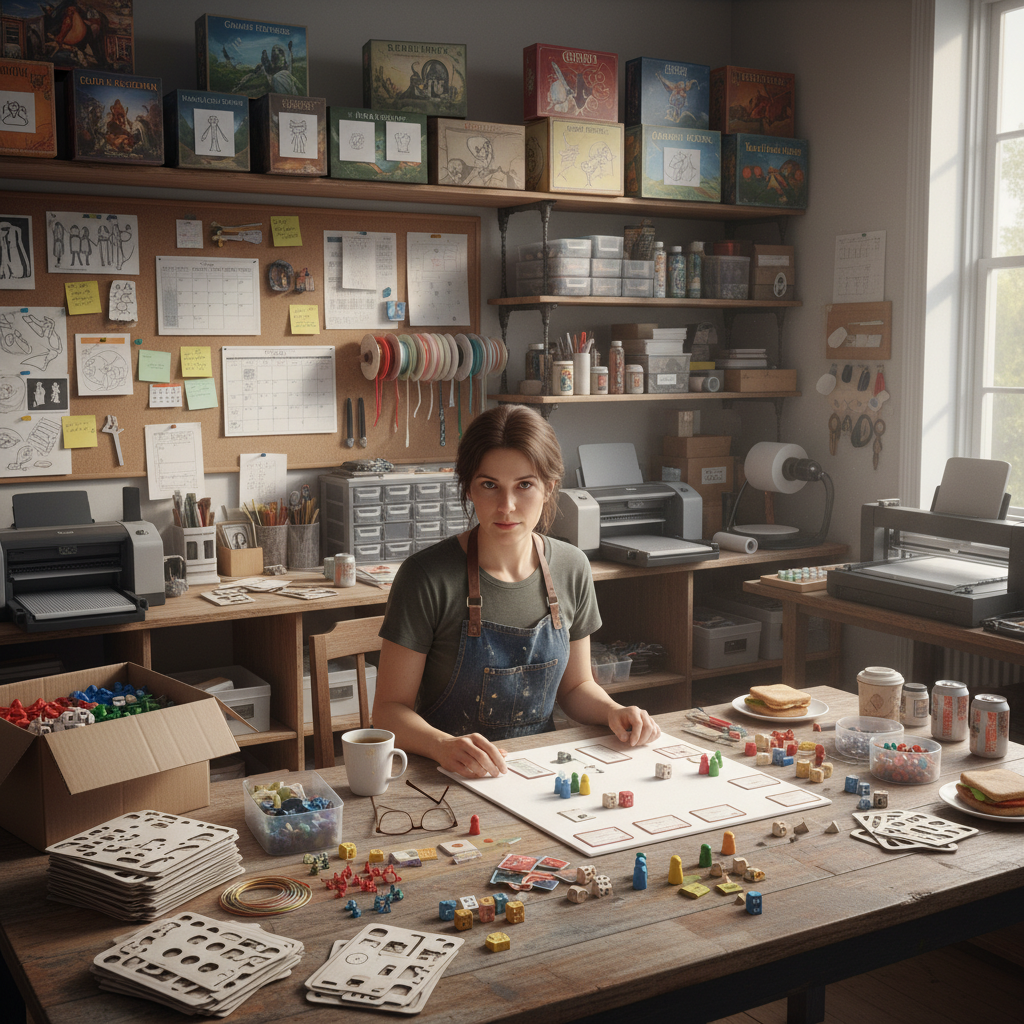
The reason for this has to do with the global nature of game production. While countries like Germany (widely considered the spiritual home of modern tabletop gaming) have board game manufacturing facilities, for the most part China is the place to go if you want someone to do everything from print the cards for your game to custom-mold plastic miniatures, create wooden tokens and other details, die-cut the game boards, and more.
Stegmaier (who lives in the United States) and the vast majority of American board game publishers produce domestically, but the process of getting cards printed, cutting boards, and other seemingly simple steps is cost-prohibitive. Stegmaier himself had been quoted $10 by a U.S.-based manufacturer. Not for the game box, the rule book, or the cards — just the empty box.
The same $10, he noted, can buy a full game produced and boxed in China.
This is the scale of the problem with the new tariff. Small and mid-sized board game publishers, in particular, have razor-thin profit margins as is. To suddenly have costs soar with no grace period to plan or adapt is a massive shock to the system.
Thoughts From Others in the Industry
Meredith Placko, CEO of Steve Jackson Games (makers of the Munchkin series), wrote about the problem on her blog, echoing Stegmaier’s statement of fact.
“A lot of people ask, ‘Why not manufacture in the US?’ I wish we could. We have for a few projects, but the infrastructure to support full-scale boardgame production — specialty dice making, die-cutting, custom plastic and wood components — doesn’t meaningfully exist here yet. I’ve gotten quotes. I’ve talked to factories. When the willingness is there, the equipment, labor, and timelines just aren’t.”
Placko summed it up starkly. “It’s not just a policy change,” she said in the post, “it’s a seismic shift in the entire industry.”
Rob Daviau, co-founder of Restoration Games and a veteran game designer (creator of Pandemic Legacy), has spent the past several months sounding alarms on Twitter.
As the interviews and blog posts pile up, Daviau’s mordant assessment of the situation is starting to look like an actual description of the state of the industry. He told BoardGameWire in an interview: “If the tariffs go to that level, then what I fear is a great collapse in the hobby gaming market in the US.”
Who’s Affected? Gamers, Too
It’s not just game makers who will be affected by the change. Gamers could feel the effects, too. Prices on newly released games will likely go up. Some companies will attempt to save costs in other areas to keep the consumer price the same, but as a result, the quality of those games will be reduced. Others may simply scale back on new releases.
There’s also fear for the independent local game stores that are already facing online competition. With gamers likely to be buying their new games from online stores (since they’re already in their possession, or else offer better discounts) or just playing from their existing collections (many of which already have unwound boxes of shame on their shelves), brick-and-mortar game stores could face a major hit, too.
“Within a few months, US companies will lose a lot of money and/or go out of business,” Stegmaier wrote, “And US citizens will suffer from extreme inflation.”
Workarounds? Little, and They’re Infuriating
Companies can work around this — publishers may try to use European distributors as a cut-out, since those countries’ markets aren’t so affected by the tariff. But this is little or no workaround for American companies, whose customers are in the United States.
As Stegmaier noted in his blog post, 65 percent of his company’s sales are in the United States. “It will still be a big hit for the company,” Stegmaier said, “We will still be in a survival mode not unlike we’ve never been in before.”
Equally infuriating is the timing. If you’re still in the design phase or just getting into early production, you can theoretically re-budget in light of the news. But if your games have already been produced in China and are in transit to the U.S. or in American ports waiting to be cleared, there’s no avoiding the tariff.
Chris Solis, head of California’s Solis Game Studio, found himself in exactly that position when the tariff was announced. “I have 8,000 games leaving a factory in China this week,” he tweeted, “and now need to scramble to cover the import bill.”
Tariffs Hear Us, Too
The Game Manufacturers Association (GAMA), an advocacy group for board game publishers and producers, has sent letters and made calls to try and stop the tariffs or at least delay their application. So far, not much progress has been made.
So, where does the industry go from here? With so much of the basic structure of the modern game-making business upended by a single tariff, it’s hard to know. For a community that grew up on creativity, problem-solving, and fun, the future looks dangerously precarious.