
- calendar_today August 15, 2025
Sil Wasn’t Just Hot—She Was Deadly and Designed That Way
Last month, the film world said a collective goodbye to actor Michael Madsen. Although his most iconic roles are probably his steely, sandpaper-voiced characters in Reservoir Dogs, Kill Bill, and Donnie Brasco, the Oscar nominee’s actual filmography contains a few hidden gems. Among them is Species, the 1995 alien-hybrid monster film where Madsen plays a black ops mercenary tasked with hunting down a half-human, half-alien hybrid. It’s one of his more niche turns, and many obituaries failed to mention it.
Species, now three decades old, is a strange film—hard to sum up and easy to mischaracterize. Directed by Roger Donaldson (No Way Out, The Bounty), it’s as much a slasher film as it is a supernatural monster movie. On one hand, it’s a morality play about man’s hubris with science and nature, as well as the grim results of extreme genetic experimentation. On the other hand, it’s a nightmarish cautionary tale of an extraterrestrial being that needs to be stopped before it can multiply.
The premise: When the U.S. government receives two transmissions from outer space (one containing details about a new, revolutionary fuel source; the other instructions on splicing alien and human DNA), the government decides to follow through. Under the watchful eye of Dr. Xavier Fitch (Ben Kingsley), a hybrid woman named Sil (Michelle Williams in her formative years) is created. She’s a perfect specimen, with both human and non-human DNA. The experiment was supposed to result in a placid organism, one that could be easily controlled and used for research. Instead, it results in something far more sinister.
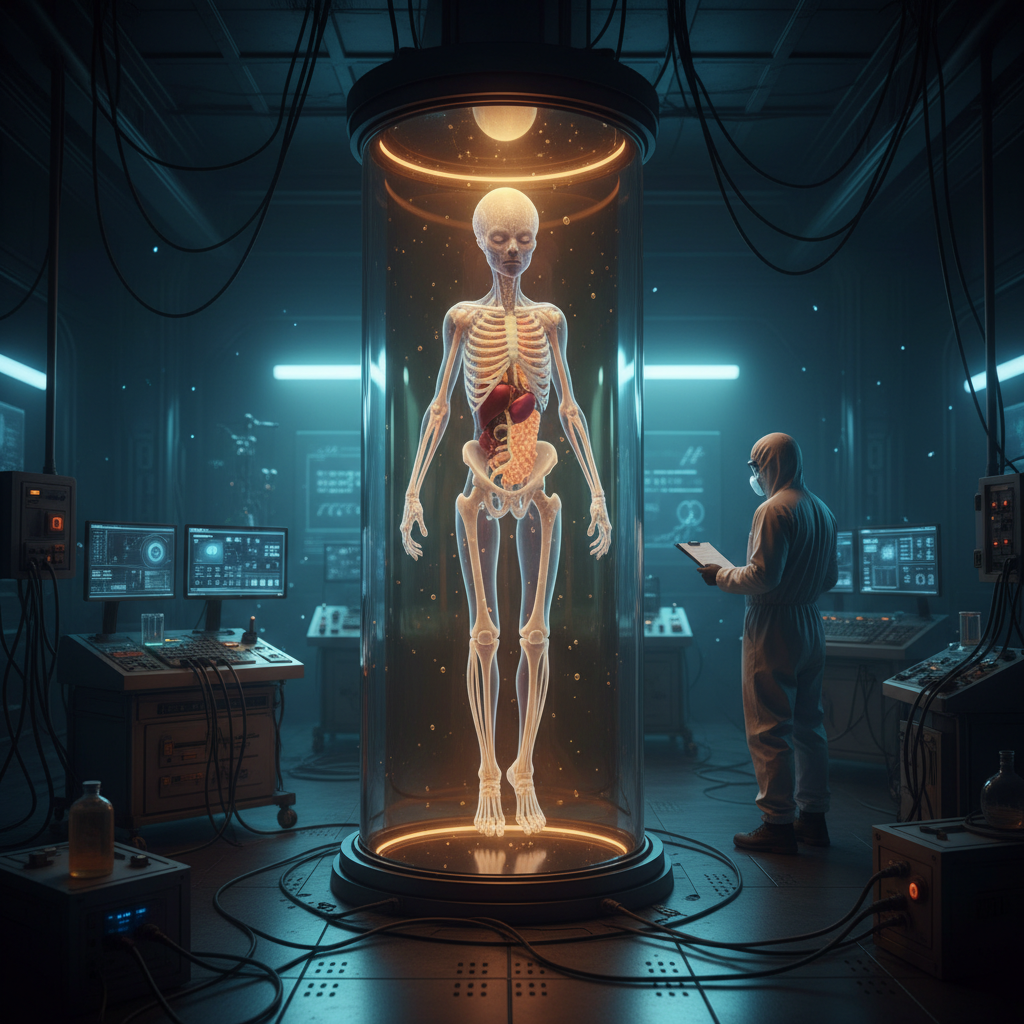
Sil is a genetically accelerated organism, rapidly maturing in her cell. In just a few months, she physically resembles a 12-year-old. But things aren’t going as planned. She suffers from violent nightmares, and there are signs that Sil is less docile than the experimenters would have liked. When Fitch decides to end the project by pumping cyanide gas into Sil’s holding tank, she breaks free. The creature escapes.
In order to hunt her down, Fitch recruits a group of researchers and specialists to track the hybrid. They include Madsen’s Preston Lennox, a straight-shooting mercenary; Dr. Laura Baker (Marg Helgenberger), a molecular biologist; Dr. Stephen Arden (Alfred Molina), an anthropologist; and Dan Smithson (Forest Whitaker), an enigmatic empath who is in touch with Sil’s emotions. The journey takes them all over the country—and eventually, all the way to Los Angeles, where Sil, now fully-grown and played by Natasha Henstridge, seeks out a mate and begins her mission to reproduce. Smart, intuitive, and adaptable, Sil is no longer child-like. She’s fully aware of her purpose: to survive and to multiply. As the bodies mount (a train tramp, a nightclub victim, a doomed lover), the motley crew of researchers and mercenaries hunt her and try to stop her before she can create an army of deadly hybrids.
The Alien Species Was Designed to Seduce (And Kill)
The visual design of the alien/human hybrid was striking—and the brainchild of surrealist and Giger ace H.R. Giger. Known best for his work designing the xenomorph in Ridley Scott’s Alien, Giger’s take on Sil was decidedly different. “Sil was to be an aesthetic warrior,” he said of his work. “She was also sensual and deadly.”
Sil’s design was haunting: In her final form, Giger had created a humanoid creature with translucent skin. “We thought it looked like a glass body but with carbon inside,” he said. Giger wanted to make several variations of Sil as she went through different stages of alien evolution, but budgetary and time constraints forced him to scale back; he ultimately created the alien transformation cocoon and the monster mother form that was used in the climactic sequence.
Giger was, ultimately, dissatisfied with the final result. In his opinion, Species borrowed too much from Alien—particularly its “punching tongue” and the notorious birth scene that formed the climax of Ridley Scott’s 1979 film. Giger had to step in during filming to have Sil killed by a bullet to the head, rather than dismembered by flames, which the crew had originally intended. “Species is more like Alien than I like,” Giger said in 1995. “I have the impression it’s too similar to Alien. The scene of the alien after she’s crushed is too much like the chestburster in Alien.”
Species, for all its aspirations and oddball strengths, wasn’t particularly well-received by critics. Feldman’s script was stilted, the dialogue more than a little wooden, and most of the characters one-dimensional. Whitaker’s empath is largely a passive observer, aside from what we already know. Kingsley’s Fitch is an unrepentant genetic monster without a true moral center, and much of the thematic work is alluded to but not fully explored. Alien contact, bioethics, maternal instinct, the ethics of scientific progress—Species hints at these concepts but never really grapples with any of them.
Species was a film that often had grander aspirations than it could bring to the screen. But despite that, it’s strangely, surprisingly alluring, a weird mix of pulp science fiction and erotic body horror. Feldman was inspired to write the story in part by an Arthur C. Clarke op-ed he’d read, which speculated that aliens might not come to Earth in part because faster-than-light travel was probably impossible. “Then I thought: what if extraterrestrials did contact us but with the blueprints to create something organic rather than technological, something which could use and feed on the Earth’s matter?” Feldman asked in an interview. “An invasive species built of the Earth’s DNA.”
The result was an outright creature feature, but one that also doubled as a cautionary tale. It will never be mentioned in the same breath as Alien or The Terminator, but Species occupies its own little space, its cult corner of science fiction. The movie still has a lot to offer, too: Henstridge’s distinctive, otherworldly performance; Madsen’s gritty, lived-in character work; and of course, the inimitable, unforgettable artistry of H.R. Giger. For all its problems and obvious weaknesses, Species remains one of 1995’s most singular creature features—and one of the most unassailable filmographies in Madsen’s illustrious, varied career.
Three decades after its release, Species is a reminder of what late ’90s science fiction could look like when style began to supersede substance. It’s a reminder of both how thrilling genre filmmaking could be and also how weird and unexpected a given role can be for even the most skilled actors. Madsen certainly found that weirdness, and now we get to relive it along with him.


