
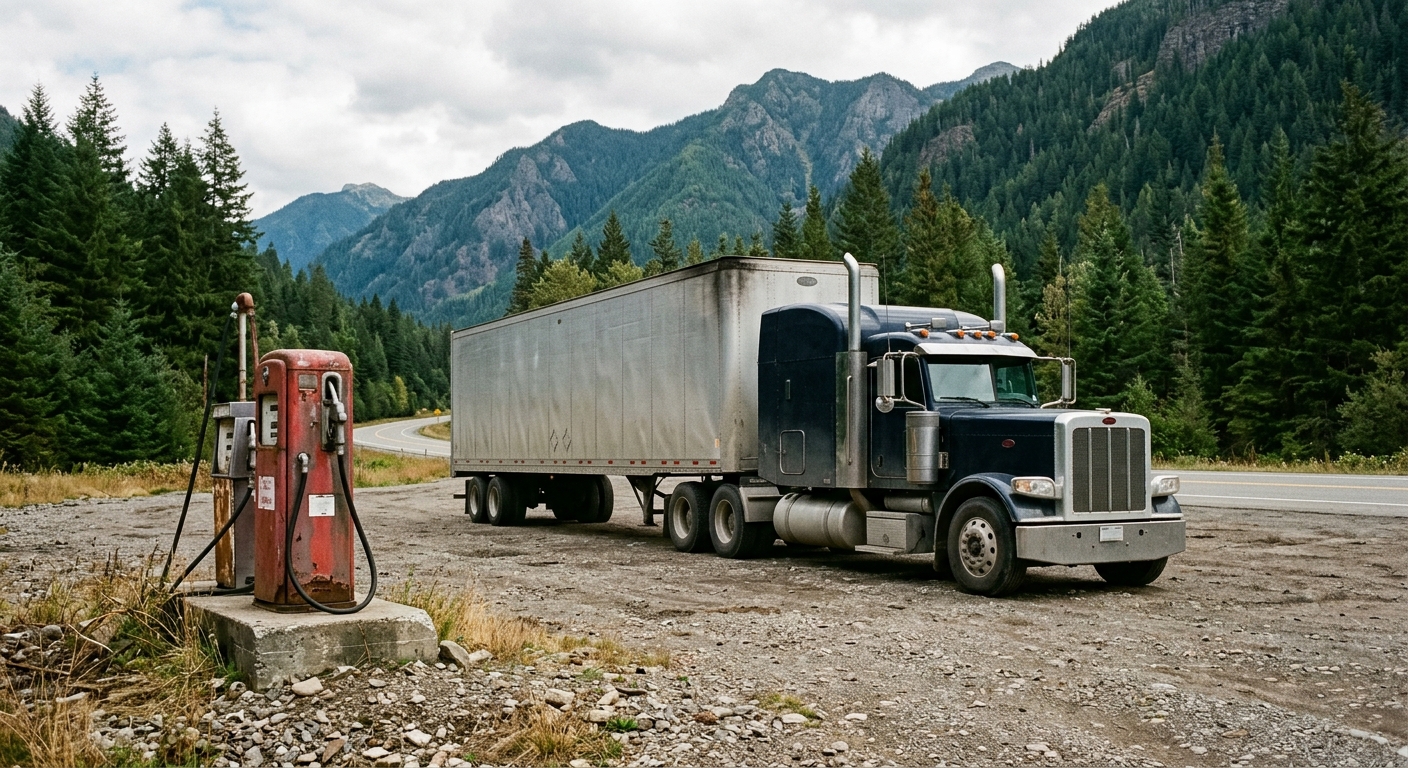
AI-generated illustration; not a photograph of the reported event.
- calendar_today October 20, 2026
Trucking Bankruptcies Surge Amid High Diesel Costs
The trucking industry is experiencing a wave of bankruptcies as high diesel prices combine with ongoing challenges in freight rates and operating costs. At least 16 trucking, delivery, and transportation companies filed for bankruptcy between late August and September 21, according to trade publication FreightWaves. This trend has continued with more filings, including Chicago-based Midwest Expedited Co., a 95-truck carrier that filed for Chapter 11 protection on October 6.
Impact of Rising Diesel Prices on Independent Truckers
Long-haul truck driver Bryan Singh described the dire situation for operators like him. Singh noted that diesel prices in California are approaching $8 per gallon, severely affecting his bottom line. Nationally, diesel averaged $6.30 per gallon in recent weeks, based on AAA data. While this marks a slight decline from the $6.53 record set on September 22, it still represents a 73% increase from $3.65 a year earlier.
Small Operators Face the Greatest Squeeze
According to Lewie Pugh, executive vice president of the Owner-Operator Independent Drivers Association (OOIDA), small businesses comprise 96% of registered carriers, and 52% operate just one truck. These independent truckers typically pay full price for diesel and supplies, lacking the volume discounts available to larger fleets. Pugh emphasized the financial strain created by the delay in payment for hauling loads, which can take 30–90 days, while fuel and other operating expenses must be paid upfront.
Freight Rates and Market Conditions Compound Losses
Pugh noted that many of the recently bankrupt carriers were already under pressure. The industry saw a surge in new carriers during the pandemic when freight rates soared. As demand fell, rates dropped while truck, tire, and repair costs remained high. FreightWaves documented more than 20 trucking-related bankruptcies within a single 30-day period in May, illustrating ongoing market distress even before diesel hit recent highs.
Economic Experts Weigh In
Stephen Burks, professor emeritus of economics at the University of Minnesota Morris and a former truck driver, described the recent period as the industry's longest freight downturn since the Great Recession, stretching from late 2022 through late 2025. He said that for many medium and smaller carriers, the spike in fuel costs could be decisive.
Burks explained that freight rates do tend to increase with fuel costs, but there is usually a lag of one to two months. While large carriers often have contracts with adjustable fuel surcharges, small operators must cover the expense gap on their own. Both Burks and Pugh predict further failures among small carriers in the months ahead.
Consequences for Shoppers and the Economy
Pugh cautioned that the elevated cost of diesel will ultimately be felt by consumers, since manufacturers cannot absorb such large cost increases indefinitely. Diesel's widespread use in agriculture and heating could also raise costs in other sectors as winter approaches. Burks offered a more nuanced view, stating that transportation typically accounts for a small portion of most consumer goods' prices, so direct effects should be limited for most products. However, he warned that if high diesel prices persist, they could contribute to stubborn inflation, making it more difficult to bring down interest rates in the coming year.
The Industry's Future and Market Adjustment
Pugh underscored the need for stability in both fuel prices and freight demand, recalling the 2008–09 period as a similarly turbulent time. Burks concluded that, despite increased bankruptcy filings and business closures, the situation does not constitute a crisis for the industry overall. The recent boom attracted large numbers of new carriers, and as rates recover, others are likely to enter the market. He described this process as a normal adjustment in a highly competitive industry, where even the loss of 10,000 carriers could be absorbed.
Source: kivitv.com.


